|
Christmas reflection AIT home, 25 December 2025 Just before the start of the Sunday Mass preceding Christmas Day, Father Joe Maier approached me with a somewhat puzzled expression and asked, “Can you believe that Mary was forced to give birth to Jesus in a manger?” He seemed troubled by this traditional understanding and suggested that perhaps Mary and Joseph had freely chosen a stable as the place where Jesus would be born. His reflection caught me by surprise, but I replied respectfully, “My understanding, Father, is that as they neared Bethlehem, shepherds they encountered on the road suggested that, should they fail to find a place to stay, they might seek shelter in the stables behind the town” The thought appeared to reassure Father Joe. After a brief pause, he smiled and said, “I like that.” In this piece, I wish to reflect on the lives of the shepherds who figure so prominently in the nativity story, yet the bible says very little about them—who they were, why they were chosen and what became of them after they adored the Child. I will draw upon the Catholic bible, the sermons and writings of the Fathers of the Catholic Church, as well as the writings of saints and mystics. In the Catholic New Testament bible, references to the shepherds at Bethlehem are found only in the Gospel of Luke. The Gospel of Matthew does not mention the shepherds; it focuses instead on the Magi. We can read the following story from Luke 2:8-20: "Some shepherds were staying out in the fields and keeping watch over their flock by night. And an angel of the Lord suddenly stood before them, and the glory of the Lord shone around them; and they were terribly frightened. But the angel said to them, “Do not be afraid; for behold, I bring you good news of great joy which will be for all the people; for today in the city of David there has been born for you a Saviour, who is Christ the Lord. This will be a sign for you: you will find a baby wrapped in cloths and lying in a manger.” And suddenly there appeared with the angel a multitude of the heavenly host praising God and saying: “Glory to God in the highest. And on earth peace among men with whom He is pleased.” When the angels had gone away from them into heaven, the shepherds began saying to one another, “Let us go straight to Bethlehem then, and see this thing that has happened which the Lord has made known to us.” So, they came in a hurry and found their way to Mary and Joseph, and the baby as He lay in the manger. When they had seen this, they made known the statement which had been told them about this Child. And all who heard it wondered at the things which were told by the shepherds. But Mary treasured all these things, pondering them in her heart. The shepherds went back, glorifying and praising God for all that they had heard and seen, just as had been told them.” In Maria Valtorta’s Poem of the Man-God, the shepherds are portrayed not as anonymous figures but as a small group of men living on the outskirts of Bethlehem. They number twelve, ranging in age from teenagers to white-haired elders. Their names are Elias, Levi, Samuel, Jonah, Isaac, Tobias, Jonathan, Daniel, Simeon, John, Joseph, and Benjamin. They are presented as the first worshippers of Christ after Mary and Joseph. Despite their poverty, they offered the Holy Family practical and necessary gifts for the newborn Jesus, such as milk and wool. They also helped spread the news of the birth by informing Mary’s relatives, Zechariah and Elizabeth, and assisted in finding a house in Bethlehem where the Holy Family could stay. This is presented as the same house mentioned in the Gospel of Matthew at the time of the visit of the Magi: “After coming into the house, they saw the Child with Mary his mother” (Mt 2:11). After the visit of the Magi, the Holy Family fled to Egypt to escape Herod’s wrath. What followed was a long period of silence about the fate of the shepherds. But how could Jesus forget his first friends and worshippers? He revealed himself to many throughout Palestine—could he not also reveal himself to those faithful souls who had waited for him with perseverance for so many years? In Maria Valtorta’s writing, Jesus seeks out the shepherds during the first year of his public ministry and finds them scattered across Judea. Some had already died, while others remained humble shepherds, living under the shadow of persecution. They were persecuted for having been the first to announce the coming of the Messiah, and by the people of Bethlehem, who blamed them for having drawn Herod’s wrath and the massacre of the infants. Some of the shepherds became part of the wider circle of Jesus’ disciples, and a few had lived until the crucifixion, witnessing his suffering and death. The life of the shepherds is a paradox. They endured lifelong poverty and persecution yet possessed a profound spiritual wealth that no material riches could ever buy. God chose them to receive the divine announcement of the birth of Christ and granted them the greatest honour of being his first worshippers. He allowed them to behold his glory and bestowed upon them his peace, a peace that the world cannot give. But there is another message God wants to reveal to us about the shepherds, and a reason why they were chosen. These messages were given through the fathers of the Catholic Church, who consistently drew theological and spiritual meanings of the role of the shepherds. Here are the main themes, with examples from the fathers:
Across the fathers, the shepherds signify humility, vigilance, simplicity, and witness. They are not incidental figures but theologically chosen witnesses to the mystery of the Incarnation. Father Joe has good reason to be upset by the fact that Jesus was born in a poor manger, “because there was no room for them in the inn” (Luke 2:7). Despite Joseph’s tireless efforts to find shelter, going from door to door and pleading for a room, nothing was available. Every place was full. He begged the innkeeper and appealed to fellow travellers, pointing out that Mary was about to give birth and imploring them to show mercy. Yet all his pleas were in vain. With no other option, Joseph and Mary placed their trust in God. Following the advice of the shepherd, they went beyond the town and found refuge in a cave—low, dark, damp, and cold. In this humble place, provided by God after the people of Bethlehem refused them shelter, the Child was born—the King of Kings and Lord of Lords. May this Christmas teach us humility and trust in God’s providence, especially when others fail to help us in times of need. May it also teach us to honour and love the humble, the poor, and the persecuted, as exemplified by the shepherds, who are especially loved by God. Merry Christmas! 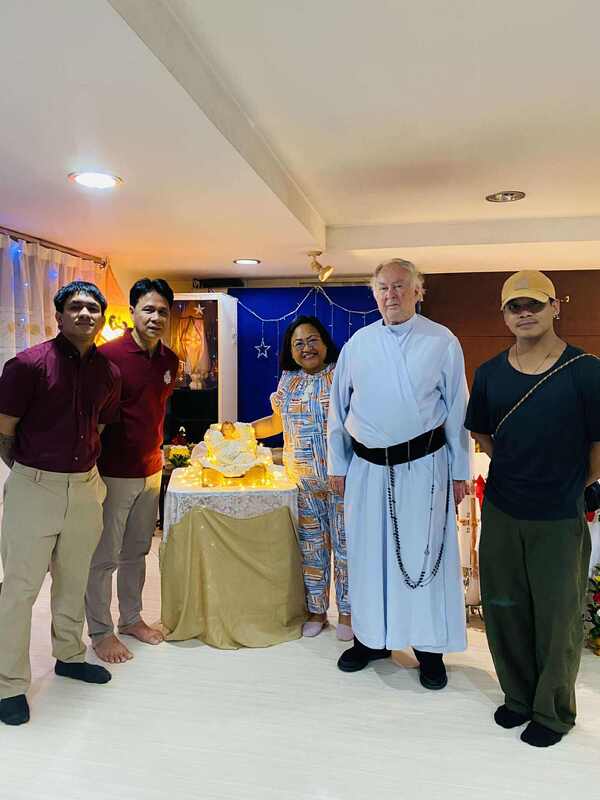 EDante
San Francisco, Agusan del Sur, 25 December 2024 As the Christmas season begins, we were greeted by the familiar and heartwarming melodies of Christmas songs. Singing these songs has always been a cherished part of my family’s Christmas celebration, enhanced through the annual Christmas carols organized by the AIT Catholic Community. This year, I was deeply moved by a particular Christmas song I found on YouTube, where a thousand people came together to break a record and bring the beloved hymn “Angels We Have Heard on High” to life. The performance captures the essence of the Christmas season and celebrates the birth of our Lord Jesus Christ. The music builds to a dramatic climax, culminating in the powerful line “Gloria in excelsis Deo.” Every time I hear it, the song touches my soul in a profound way. At the time of writing, this YouTube video has garnered over 65 million views and nearly 26,000 comments. As I read through the comments, I was amazed by the song’s universal appeal—not just among Christians but also among people of other faiths. It was surprising to see how deeply Christmas and its songs resonate with people from all walks of life, across the world. One comment read: “I'm a Muslim girl from Tajikistan. I love Christmas and its songs more and more. I always wait for Christmas like a child. This song touched my heart.” Another said: “I'm a Hindu, and I absolutely love it. May Jesus bless us all.” And yet another: “I'm an atheist but this song really touched me and moved me to tears. I regard Jesus as a great teacher of mankind, and I hope that someday the world finds peace. Love all.” And finally: “I am Jewish; found this song and it melts my heart. Remember Emmanuel, Jesus was born a Jew. I believe that he, the Lord is our messiah.” In this piece, I reflect on the role of music in the Christian faith and personal spiritual life. Beginning in the Old Testament, the children of Israel have always entrusted to songs the sincere cries of their hopes, joys and pains. The Book of Psalms, often referred to as the hymnal of ancient Israel, is filled with songs of praise, lament, thanksgiving, and petition. Music was central in the worship practices of the Tabernacle and later the Temple in Jerusalem. The Levites were appointed to sing as part of their duties (1 Chronicles 15:16; 2 Chronicles 5:12-13). The Israelites used various instruments such as harps, lyres, cymbals, trumpets, and tambourines (Psalm 150). David composed and sang songs as personal acts of devotion to God, showcasing music's role in private worship and prayer (1 Samuel 16:23; Psalms 23, 51). The New Testament commences with the celebration of the birth of Jesus. At this time, sacred songs were composed. After the angel Gabriel announced that Mary would conceive Jesus, she visited her cousin Elizabeth. In response to Elizabeth’s blessing, Mary sang a hymn of praise: “My soul magnifies the Lord, and my spirit rejoices in God my Savior” (Luke 1:46-47). This song is known as The Magnificat or The Song of Mary. On the night of Jesus’ birth, a multitude of angels appeared to shepherds in the fields, rejoicing and proclaiming the good news. They praised God with the words: “Glory to God in the highest, and on earth peace among men of good will” (Luke 2:8-14). This celestial hymn is called The Gloria or The Song of the Angels. Later, when Mary and Joseph presented the infant Jesus at the Temple, the devout Simeon recognized Him as the Messiah. He sang a song of fulfillment and peace: “Lord, now you are dismissing your servant in peace, according to your word; for my eyes have seen your salvation” (Luke 2:29-30). This hymn is known as The Nunc Dimittis or The Song of Simeon. During my younger years, I was immersed in the vibrant world of Western pop music from the 1970s and 1980s. These decades marked the golden age of rock, with legendary bands like Queen, Eagles, Bon Jovi, and Duran Duran. It was also a time when singer-songwriters such as Elton John and Billy Joel rose to prominence, alongside iconic figures like Michael Jackson and Madonna. Pop music was undeniably delightful, with its catchy tunes and upbeat rhythms that had the power to uplift moods and bring a sense of joy. Like many young people of the time, I spent countless hours listening to music on the radio or cassette player. Whether studying, relaxing, or even falling asleep, music was a constant companion and became part of my daily life. In the early 1990s, my wife and I were called to join the Christian renewal movement through a programme organized by Couples for Christ in Bangkok. This renewal focuses on Christ-centered living, personal conversion, and the deepening of faith, while also highlighting the transformative presence and power of the Holy Spirit. Through this experience, my soul was transformed, and I developed a deep appreciation for spiritual songs. While the pop music that I used to love was delightful to the ear, I discovered spiritual songs touch the inner spirit, guiding me into profound prayer and worship. St Augustine says: “He who sings prays twice.” This quote emphasizes the power of music in connecting with God, suggesting that singing elevates the act of prayer to a deeper level of devotion. The impact of these songs is transformative, fostering emotional and spiritual healing while bringing deep peace to the heart. They perfectly nurture the soul, offering spiritual nourishment and grace. Spiritual music possesses a soothing character that it led the soul to harmony with God. Does the music we listen to, and sing reflect our inner selves? According to Aristotle, it does. His theory suggests that music imitates the various states of the soul—such as anger, gentleness, and temperance—and can influence our character. He believed that good music positively shapes one's character, while bad music has a harmful effect. According to Plato, "Music is the language of the soul.". This reflects the idea that music, especially spiritual music, expresses the innermost emotions of the soul and helps one connect with the divine. Early Church Fathers consistently cautioned believers against secular music that promotes immoral content or anti-Christian sentiments. Certain genres, such as rock music, can stir erotic passions, which, if unchecked, may lead to sinful behaviors and destroy spiritual life. This year, in June, approximately 400 singers and musicians took part in the 4th International Meeting of Choirs at the Vatican. The event discussed topics such as sacred music and the history of Gregorian chant with practical workshops for musicians and choristers. During the occasion, Monsignor Marco Frisina, the director of the Choir of the Diocese of Rome, introduced his new song for young people titled “Christ is My Hope” for the 2025 Jubilee Year. Frisina said he was thinking about “how important it is to sing about the joy of hope.” “Because everyone thinks with sadness about the things that happen — war, violence, hatred, enmity — but it’s good to sing instead to counter all that, to sing that Christ is our joy and our hope.” Let us joyfully celebrate this Christmas with heartfelt spiritual songs that glorify God. As the Psalmist proclaims: 'Oh come, let us sing to the Lord; let us make a joyful noise to the rock of our salvation! Let us come into His presence with thanksgiving; let us make a joyful noise to Him with songs of praise!' (Psalm 95:1-2)." EDante Sharing given at the 2024 CFC Theme Weekend Retreat, AIT Conference Centre, 16 March 2024 In December 2023, I returned to the Philippines to accompany my elderly father for two months. While there, I encountered an issue involving one of our farm staff. Before going into the details, let me provide some background about this person. Several months earlier, I was informed that he had been selling farm products without our permission. Also, neighbours raised concerns about his questionable activities. Consequently, my farm manager recommended that I should terminate his services. I said OKAY, if he is problematic, we don’t need him on the farm. I instructed my farm manager to inform him of the decision. The worker complained about his dismissal and sought assistance from a barangay official. He claimed that only the owner could dismiss him personally. The barangay official supported him. Since I was not there, my farm manager could not enforce it and reported to me his frustration. This is the context. When I returned last December, I did not pursue terminating his services but gave him another chance. He continues to work for us. One day, this staff came to see me. He was complaining about his eye infection and needed financial help for treatment. So, I gave money for his treatment. No need to pay, I told him. Anyway, it was Christmas. I was pleased that I could help him and be good with him. One week later, I got a call informing me that the same staff was waiting for me at home. At that time, I was working online in a café in town. I was a bit annoyed and didn’t want to stop my work and go home, and my pride told me to let him wait until I was done. I only stopped my work and returned home 3 hours later, thinking the staff would have already left. But he was there. I was surprised. He was looking quite upset. He said he needed more money to buy medicines. I was suspicious and wondered whether he was abusing me. I told him it was not my problem. I calmed down and asked him to show me the doctor's prescription. I wanted to go with him to the pharmacy to buy the medicines. I wanted to ensure that he needed the money for medicines. But there were no prescriptions. He could not produce it, and he left so upset. I found out later that he was offended when I demanded to see the doctor’s prescriptions because I was suspicious. Anyway, in my morning prayer the next day, as I read a spiritual book, a passage caught my attention. In this passage, Jesus said: "I come to ask you for your reconciliation; go and reconcile with your brother, for in reconciling with him, you are reconciling with Me, your God. Offer Me your peace as I offer you, My Peace; imitate Me and be Holy." These words hit me. I realized that I had sinned against this brother. I let him wait for 3 hours while suffering from a painful eye infection. I told him his problem was not my problem. I distrusted him. By offending this person, I also offended God. So, when I prayed to God, He immediately alerted me. I saw God’s humility in action. Although he was the one offended, he was the first one to seek reconciliation. He descended to my level and came offering his reconciliation. God is truly a humble God. This left me with a very difficult task. How can I reconcile with this person? I knew he was upset with what happened the day before. Anyway, I dared to call him. He answered the call but gave the phone to his wife. You see he was really upset. His wife explained that her husband had been suffering for weeks. He could not do his work and could not sleep because of the pain. He had been upset all these times because of the pain and needed medication. She said the first time they got the money from me, they went to the hospital and waited for hours and hours, but there was no doctor. It happened during the middle of the Christmas holidays, and most doctors were away. So, he did not receive medication for him for a week. They also used the money I gave for other purposes. But now, she said that they were ready to go to the hospital again, and if they got the doctor’s prescription, they would come to see me. Later that day, they came, and the husband was not talking to me. It was the wife you showed me the doctor’s prescription. So, I arranged for somebody to accompany the wife to buy the medicines while the husband, still suffering from an eye infection, was with me at home. So, I spoke with him gently, I served him snacks, and with all humility, I dared to humble myself and beg him to forgive me. He was stunned at first, but shortly after, he started to speak with me. It was a humbling experience but a victory for me that I reconciled with my brother, and by doing that, I also reconciled with the Lord. I felt the Lord was pleased. I also felt His Peace. The staff recovered from his eye infection and has been back to work. God is a humble God. Even if we offend him, he comes running to us, offering his peace, his reconciliation and most of all, his love. God is telling us today to imitate and obey Him. All glory and praise to God. Amen.  EDante Sharing given at the CFC International Leaders Conference, SMX, Manila (20 January 2024) My wife, Moonyeen, and I have been members of CFC in Thailand for 32 years. As many of you know, Thailand is a predominantly Buddhist country. We are blessed with five children; most were born in Thailand. Today, I wanted to share our experience bringing Thai Buddhists into our community. First, let me quickly give you a snapshot of Christianity in Thailand. Thailand has around 70 million people; 93% are Buddhist, 5% are Muslim, and only 1% are Christian. It is around 700,000 Christians, which is equally shared between Catholics and non-Catholic Christians. This is extremely low, considering the 300 years of Christianity in Thailand. It tells us that evangelization is a huge challenge in the country. Many Thai bishops and priests have called on the laity, including CFC, to participate in sharing the Gospel with the Thai people. Despite the challenge, Thailand is a super welcoming and open country. There is religious freedom. Thai people are generally some of the nicest, most respectful, and peace-loving people you will meet. They are also open to learning about other religions. With this in mind, I will share a CFC experience on evangelizing Thai Buddhists. In 2000, when my wife and I were serving as chapter leaders in Bangkok, Brother Jun and Sis Jean Uriarte were relocated to Bangkok and joined our community. During this period, they passionately shared their vision of evangelizing non-Christians, introducing us to the Catholic Church's Missio Ad Gentes. I shared their vision and believed that God had also called me and my wife to contribute to the mission of evangelizing non-Christians. With Bro Jun and Sis Jean’s leadership, we conducted a CLP specifically tailored for couples in mixed marriages, particularly Buddhist Thai husbands and Catholic Filipina wives. You may know that, in the past, many Thai students came to the Philippines to study. Some of them eventually married Filipina and brought them to Thailand. To prepare for the CLP, we went through the CLP training, spiritual preparation and discussions on how we can effectively support non-Christians attending our CLPs. The CLP successfully attracted couples in mixed marriages. Many of them became members of CFC and continue to do so until today. Now, you might wonder, did they become Catholics? The answer is no. Yet, they participate in our community's prayer and worship activities and sometimes take part in CFC missions to upcountry areas. At this point, I will introduce one active couple, brother Chat and sister Elsie. This couple completed the CLP 20 years ago. Sister Elsie passed away just a few months ago, and the photo on the screen was taken during her wake. While preparing for this sharing, I spoke with brother Chat and asked him how he was doing. I also told him about this conference and that many people here would want to know about his faith. Brothers and sisters, I was amazed by what I heard from him. He shared to me that every day he prays to the two hearts (the Sacred Heart of Jesus and the Immaculate Heart of Mary). He showed me the image of the Two Hearts on his altar (show image of the Two hearts). He said he talks to Jesus and Mary and says I love you, I believe in you, and I trust you. Finally, he said: “Edgar, tell the brothers and sisters in the conference that there is a Buddhist in Thailand who truly loves Jesus and Mama Mary.” He went on to tell me many wonderful stories of faith and even miracles happening in his life. Just three years ago, during the pandemic, we conducted a CLP in northeast Thailand, about 4 hours drive from Bangkok. One of the participants was a young Thai Buddhist married to a Filipina. His name is Brother Ae (show photo of Ae). With his Catholic wife, Brother Ae completed the CLP and became a member of CFC. Moonyeen and I were their household leaders until mid-last year. We witnessed the faith of this young Thai Buddhist. We did not treat him differently when we conducted household meetings. We invited him to pray with us and asked him to share as we normally do. He joined the worship and sometimes played the guitar. In one of our CLPs, he became a service team member responsible for creating communication and video materials. What strikes me about Brother Ae is the simplicity and sincerity of his prayers during our household meetings. Brother Ae and Brother Chat are powerful testimonies of non-Christians who embrace the life of our community and experience authentic conversion from the heart while keeping their religious identity. Although I hope they become Catholics, I believe conversion is a sacred process guided by the Holy Spirit. I see my role as a mere instrument to help them appreciate our faith. Another touching story we encountered involves a Buddhist couple, Brod Prasert and Sis Panida (see photo of Prasert and Panida). Their journey began when their children, who were attending a Catholic school, brought home an image of Our Mother of Perpetual Help. Unfamiliar with the image, the couple approached the teacher to learn more. This curiosity led them to attend Catechism and eventually embrace the Catholic faith. They joined the CLP as new converts and shared their inspiring journey with us during their CLP graduation. It's another beautiful example of how God, working through our Mother Mary, draws people from Buddhist backgrounds to the Catholic faith. Finally, we also reached out to Thai Buddhists through youth camps. Catholic schools in Thailand are quite popular. Many Buddhist parents want to send their children to study in Catholic schools. Several years ago, CFC Thailand organized youth camps in Catholic schools, attracting many Buddhist students as participants. Brothers and sisters, I want to end this sharing by highlighting that Missio Ad Gentes has already started in CFC. Non-Christians have joined our CLPs and youth camps and become members of CFC. Although still small, I need to recognize the leading of the Spirit towards this work and be prepared to embrace it. I must open my heart to non-Christians who seek to know and love the Lord. With this, my wife and I thank the organizers for the opportunity to share this experience with all of you. We also praise the Lord and give Glory to God. Thank you.  EDante, San Francisco, Agusan Sur, Philippines 24 December 2023 Christmas in the Philippines is a season of joy, filled with festive songs, beautifully decorated trees, and brightly lit homes. Unfortunately, it also falls during the typhoon season, when severe weather can cause major disruptions. For this reason, our family usually prefers to visit during July or August. This year, however, Moonyeen and I decided to embrace the Christmas season and planned a trip to Bohol to visit our future home before heading to our respective hometowns to spend time with our loved ones. As it turned out, a typhoon disrupted our plans. Our Bohol trip had to be cancelled, and instead, Moonyeen travelled directly to Leyte while I flew to Mindanao. In Mindanao, the family hosted a Christmas party with relatives, friends and farm staff at our farmhouse. Blessed with sunny weather, the atmosphere was filled with joy and giving. The event featured a fun-filled gift exchange game. As we all stood in a circle, each person held his or her gift. My gift attracted considerable attention, as it was elegantly wrapped in a pink silk bag often seen as holding precious jewels. So, everyone wanted to get my gift. The first game was called, asking us to hand the gift we were holding to the next person. Then, in the successive games, each one was asked to pick a gift according to certain criteria until everyone had a chance to pick a gift. It was filled with excitement and laughter as everyone aimed for the pink silk bag. As customary, we also gave presents in cash, chocolates and candies to the children and the farm staff. A touching moment occurred when I received a gift from a staff's teenage daughter. Unwrapping the gift, I found a framed pencil drawing of my portrait. The well-crafted drawing was a labour of love and spoke volumes about the young artist's sincerity. I learned that she spent her little money to buy the frame. This unexpected present touched my heart profoundly. It humbled me to realize that the gift's true value surpassed any material gifts I had shared. In that simple yet powerful pencil drawing, I recognized the deep gratitude and appreciation she held. It was a reminder that the most meaningful gifts often come from the heart, transcending the material value. A Filipino priest expressed this point nicely in his sermon: "After all, the best gifts are not wrapped in paper. The best gifts are wrapped in love, kindness, truth and gentleness." Christmas is indeed a time to give. The tradition of gift-giving mirrors God's greatest act of giving, beautifully expressed in the Gospel of John (3:16): “For God so loved the world that he gave his one and only Son, that whoever believes in him shall not perish but have eternal life.” When God, the Father, sent His Son to the world, He did not separate himself from the Son. The mystery of the Holy Trinity reveals that the Father, the Son and the Holy Spirit are inseparable. This means that the Father and the Holy Spirit were present in the Son. Jesus expressed this truth when he said, “I and the Father are one.” (John 10:30) and also when he told his apostle Philip, “Whoever has seen me has seen the Father.” (John 14:9). Therefore, when God gave his one and only Son, in truth, He gave himself entirely to us. He gifted us with himself. God himself is the Christmas gift. Another remarkable act of giving is shown in the story of the Magi (or Wise Men) found in the Gospel of Matthew. The Gospel opens with these words, "After Jesus was born in Bethlehem in Judea, during the time of King Herod, Magi from the east came to Jerusalem and asked, 'Where is the one who has been born king of the Jews? We saw his star when it rose and have come to worship him.'" Subsequently, the chapter describes the Magi's encounter with the infant Jesus: "On coming to the house, they saw the child with his mother Mary, and they bowed down and worshipped him. Then they opened their treasures and presented him with gifts of gold, frankincense, and myrrh." These symbolic gifts carry deep meanings: the gold symbolizes the baby's royal identity, the frankincense signifies his divinity, and the myrrh alludes to the child's humanity and the eventual reality of facing death. While these gifts may be material in nature, they symbolize the profound faith, wisdom and love that motivated the Magi in choosing their gifts. Finally, the legendary gift-giving act of Saint Nicholas, a fourth-century Catholic bishop in Turkey, inspired the famous figure of today’s Santa Claus. Saint Nicholas’ parents were wealthy and instilled a spirit of generosity in their son. On one occasion, he exchanged his horse for a slave in an auction so he could free him. In another story, he gave gifts to the peasants secretly by night out of humility. By the 1400s, St. Nicholas was a popular religious figure, with thousands of early chapels built in his honour. His gift-giving acts slowly became an integral part of the Christmas celebration. The name Santa Claus came around the 1500s. It comes from the Dutch Sinterklaas, which means Saint Nicholas. May this Christmas motivate us to imitate the examples of generosity shown in the story of the teenage girl at the farm, God’s giving himself to us, the Magi’s symbolic gifts to Baby Jesus and Saint Nicholas’ legendary simple acts of mercy. It is said that “Nobody is so poor that he has nothing to give, and nobody is so rich that he has nothing to receive”. Wishing you a Christmas filled with love and joy!  EDante, AIT house 9 28 December 2022 One early evening I walked with our poodle dog Mochi at the football ground of the Asian Institute of Technology (AIT) campus where we live. While walking, I was struck by the unusual appearance of the moon setting in the west and appearing much larger than usual. It seems to be pointing to a particular place on earth. Instantly, I got reminded of the Star in Bethlehem that guided the Magi from faraway lands. I have been puzzled by the idea of a star so distant away from earth guiding travelers on earth. It seems impossible in my mind. How can people in the past make use of a star as if it is a present-day GPS or Google Maps? In this piece, I will explore the current knowledge about the Star in Bethlehem, the wonderful story of the Magi and the lessons from the story based on the Gospel of Matthew (Matthew 2:1-12), other church documents, and the writings of Maria Valtorta (Poem of Man-God or Poem for short). The common belief is that the Magi found the Baby Jesus in the manger soon after birth, hence we see this in the Christmas Nativity scene of the Magi with the shepherds adoring the baby. However, Matthew 2:11 tells that the Magi entered a house (not a manger) to see the Child and His mother. From the Poem, we learned that the Holy Family left the manger soon after birth and lived in a poor house in Bethlehem, owned by the mistress (or owner) of the shepherds, for about a year before they escaped to Egypt. Mary and Joseph had to remain in Bethlehem in obedience to their cousin priest Zechariah. Zechariah insisted that the Messiah must grow up in Bethlehem according to his understanding of the prophecy presented in Matthew 2:6. It gave great sadness to Mary and Joseph to give up their comfortable home in Nazareth and find a new home and livelihood in a new place while providing the best comfort and care to the Child Jesus. It is believed there were three Magi based on the number of gifts mentioned in Matthew 2:11. Church tradition identifies them as Melchior, Caspar, and Balthazar. They are venerated in the Roman Catholic Church, Eastern Orthodox Church, Anglican Communion, and Lutheran Church. These Magi are astrologers, possessing great knowledge (wise men) and belonging to the priestly people from the “East”, which is the southern part of Asia where Turkey, Afghanistan, and Iran are located. From the Poem, we understood that these men lived separately and were unknown to each other until they met in one place near Jerusalem. They lived a strict honest life and had faith in their science and God. From their respective homes, they saw the new Star of unusual brightness appearing in the sky. Their maps of the sky had never mentioned such a Star. Its name was unknown to them. They spent many months, foregoing sleep and food, to study the zodiac and examine their hearts. Their study told them the name and secret of the Star. Its name: “Messiah”. Its secret: “The Messiah had come to our world.” The Magi likely knew of the writings of the prophet Daniel who lived in Persia about 500 years before. Daniel’s writings contain many prophecies about the birth of the Messiah. Having known the Star, each decided to take a long journey to Palestine, over mountains, across deserts, along valleys and rivers, facing great danger and risking their lives, to see the Messiah. They could only travel by night because they had to follow the direction of the Star. When they met at a point near the Dead Sea, God performed a miracle allowing them to understand and speak to each other in their different languages, the same phenomenon was experienced by the apostles at Pentecost. They traveled together to Jerusalem because they thought that the Messiah was born there since He was to be the King of the Jews. But then when they arrived in the Holy City, the Star had concealed itself and they felt their hearts breaking with pain and examined whether they had failed to deserve to see God. In Matthew 2:2-11, we learned that the Magi applied to King Herod saying “Where is the new-born King of the Jews? We saw His Star at its rising and have come to do him homage.” The Magi learned that the Messiah was to be born in Bethlehem according to a prophecy. When they left Jerusalem, they were overjoyed at seeing the Star again. The Star preceded them until it came and stopped over the place in Bethlehem where the Child was. Since the time of the birth of Jesus, there have been numerous theories about the origin and nature of the Star. Some believed it was a conjunction (or alignment) of the planets Jupiter and Saturn. However, conjunction normally does not create a spectacular sight that could have attracted the Magi. Others accepted the theory of a comet. It was found that Halley’s comet was visible in 12 BC. More recently, in 2005, some scientists claimed that it was a supernova (or a catastrophic explosion of a star). A recent BBC documentary on the subject concluded that the Star of Bethlehem must have been a comet because comets create a spectacular sight, they are moving and are pointing in a certain direction. This seems to match with the characteristics of the Star described in the Gospel of Matthew. Another approach to understanding the Star of Bethlehem is to say it had nothing to do with astrology. Many Fathers of the Church, including St Thomas Aquinas, St Augustine, and St John Chrysostom, believed that the Star of Bethlehem did not belong to the heavenly system. It was a special Star that behaved differently from normal stars. They argued that the Star’s movement was not continuous like other stars. When the Magi had to continue the journey, the Star moved on. When they had to stop, the Star stood still. In the Poem, the Star was seen as of unusual size and the moon seems small in comparison. It was close enough to earth that the Magi were able to see where it was heading towards. It lit up the entire town of Bethlehem in silvery color. The Star was seen to stop over a little house and transfigure the house with its light and radiation. It was a poor house, in the poorest town in Judah. The sight humbled the Magi because they knew that behind that poor wall, there is God. The God they have always called, but never had the least hope of seeing. Out of respect for the Child, the Magi waited until the following day for the visitation. They spent the night of their arrival in Bethlehem in ardent prayer and examination of conscience making sure that there is nothing against God in their hearts. It was a final preparation for a divine appointment, an infinite joy, and an ultimate goal of man. In man’s life, there is no greater joy and fulfillment than encountering God with a clear conscience. The Magi entered the house with their best clothes and saw Mary sitting with the Child in Her lap and Joseph standing near Her. The Child was about nine to twelve months old. Mary greeted them “May God be with you”, and the Magi stopped for a moment, completely astonished. They then proceeded and prostrated themselves at Her feet. The oldest of the Magi spoke on behalf of them all. He explained to Mary about the Star, their long journey, and their ardent desire to worship the Child God. Meanwhile, the Magi gave their gifts, gold which befits a king, frankincense which befits a God, and myrrh because the Child is also a man who will experience the inevitable law of death. After some time of contemplating the Child God and speaking with Mary, the three men went down the steps of the house and proceeded on their long journey back home. Jesus explains that the Magi is a story of faith. They had faith in everything, in science, in their conscience, and in God’s goodness. They had nothing supernatural to assure them of the truth. They were the only ones who understood the meaning of the Star. They took the long and dangerous journey, traveling over 1,000 km and trusting that God’s goodness would guide them to the unknown destination. They understood that the Messiah is both God and man while most Jews, including those in the temple of Jerusalem, expected a human king, like David, who would free the Jews from the Roman occupation and establish an earthly kingdom of Israel. Until now, 2,000 years after the birth of Jesus, present-day Jews are still waiting for this earthy and human messiah who would never come because he does not exist. The Magi also represent all the Gentile nations (non-Jews), including us, who come to adore the King of the Jews and become Christians. We have not seen the Star, but we have heard and believed the stories of Christmas and felt the love of God in our hearts. Faith is sufficient for us to come and adore God in our lives. In the Catholic tradition, the 12 days of Christmas end with the Feast of the Epiphany on 6 January 2023 this season. The Epiphany celebrates the adoration of Jesus by the Magi who represent all the different religions outside Judaism. It signifies that God can reveal Himself to all people, in all religions, who sincerely seek the true God in their hearts and live with honesty and goodness. 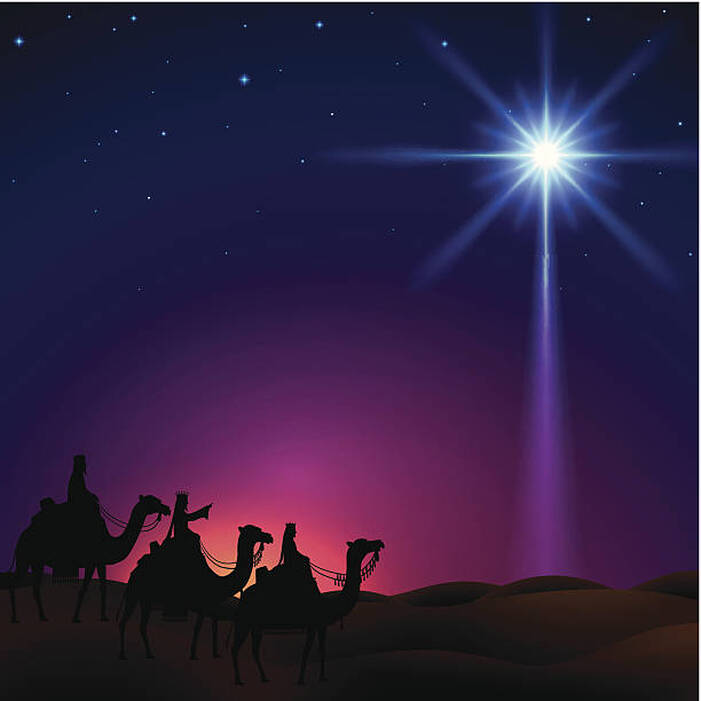 |
Authorfather of countless children Archives
December 2025
Categories |
 RSS Feed