|
Christmas reflection AIT home, 25 December 2025 Just before the start of the Sunday Mass preceding Christmas Day, Father Joe Maier approached me with a somewhat puzzled expression and asked, “Can you believe that Mary was forced to give birth to Jesus in a manger?” He seemed troubled by this traditional understanding and suggested that perhaps Mary and Joseph had freely chosen a stable as the place where Jesus would be born. His reflection caught me by surprise, but I replied respectfully, “My understanding, Father, is that as they neared Bethlehem, shepherds they encountered on the road suggested that, should they fail to find a place to stay, they might seek shelter in the stables behind the town” The thought appeared to reassure Father Joe. After a brief pause, he smiled and said, “I like that.” In this piece, I wish to reflect on the lives of the shepherds who figure so prominently in the nativity story, yet the bible says very little about them—who they were, why they were chosen and what became of them after they adored the Child. I will draw upon the Catholic bible, the sermons and writings of the Fathers of the Catholic Church, as well as the writings of saints and mystics. In the Catholic New Testament bible, references to the shepherds at Bethlehem are found only in the Gospel of Luke. The Gospel of Matthew does not mention the shepherds; it focuses instead on the Magi. We can read the following story from Luke 2:8-20: "Some shepherds were staying out in the fields and keeping watch over their flock by night. And an angel of the Lord suddenly stood before them, and the glory of the Lord shone around them; and they were terribly frightened. But the angel said to them, “Do not be afraid; for behold, I bring you good news of great joy which will be for all the people; for today in the city of David there has been born for you a Saviour, who is Christ the Lord. This will be a sign for you: you will find a baby wrapped in cloths and lying in a manger.” And suddenly there appeared with the angel a multitude of the heavenly host praising God and saying: “Glory to God in the highest. And on earth peace among men with whom He is pleased.” When the angels had gone away from them into heaven, the shepherds began saying to one another, “Let us go straight to Bethlehem then, and see this thing that has happened which the Lord has made known to us.” So, they came in a hurry and found their way to Mary and Joseph, and the baby as He lay in the manger. When they had seen this, they made known the statement which had been told them about this Child. And all who heard it wondered at the things which were told by the shepherds. But Mary treasured all these things, pondering them in her heart. The shepherds went back, glorifying and praising God for all that they had heard and seen, just as had been told them.” In Maria Valtorta’s Poem of the Man-God, the shepherds are portrayed not as anonymous figures but as a small group of men living on the outskirts of Bethlehem. They number twelve, ranging in age from teenagers to white-haired elders. Their names are Elias, Levi, Samuel, Jonah, Isaac, Tobias, Jonathan, Daniel, Simeon, John, Joseph, and Benjamin. They are presented as the first worshippers of Christ after Mary and Joseph. Despite their poverty, they offered the Holy Family practical and necessary gifts for the newborn Jesus, such as milk and wool. They also helped spread the news of the birth by informing Mary’s relatives, Zechariah and Elizabeth, and assisted in finding a house in Bethlehem where the Holy Family could stay. This is presented as the same house mentioned in the Gospel of Matthew at the time of the visit of the Magi: “After coming into the house, they saw the Child with Mary his mother” (Mt 2:11). After the visit of the Magi, the Holy Family fled to Egypt to escape Herod’s wrath. What followed was a long period of silence about the fate of the shepherds. But how could Jesus forget his first friends and worshippers? He revealed himself to many throughout Palestine—could he not also reveal himself to those faithful souls who had waited for him with perseverance for so many years? In Maria Valtorta’s writing, Jesus seeks out the shepherds during the first year of his public ministry and finds them scattered across Judea. Some had already died, while others remained humble shepherds, living under the shadow of persecution. They were persecuted for having been the first to announce the coming of the Messiah, and by the people of Bethlehem, who blamed them for having drawn Herod’s wrath and the massacre of the infants. Some of the shepherds became part of the wider circle of Jesus’ disciples, and a few had lived until the crucifixion, witnessing his suffering and death. The life of the shepherds is a paradox. They endured lifelong poverty and persecution yet possessed a profound spiritual wealth that no material riches could ever buy. God chose them to receive the divine announcement of the birth of Christ and granted them the greatest honour of being his first worshippers. He allowed them to behold his glory and bestowed upon them his peace, a peace that the world cannot give. But there is another message God wants to reveal to us about the shepherds, and a reason why they were chosen. These messages were given through the fathers of the Catholic Church, who consistently drew theological and spiritual meanings of the role of the shepherds. Here are the main themes, with examples from the fathers:
Across the fathers, the shepherds signify humility, vigilance, simplicity, and witness. They are not incidental figures but theologically chosen witnesses to the mystery of the Incarnation. Father Joe has good reason to be upset by the fact that Jesus was born in a poor manger, “because there was no room for them in the inn” (Luke 2:7). Despite Joseph’s tireless efforts to find shelter, going from door to door and pleading for a room, nothing was available. Every place was full. He begged the innkeeper and appealed to fellow travellers, pointing out that Mary was about to give birth and imploring them to show mercy. Yet all his pleas were in vain. With no other option, Joseph and Mary placed their trust in God. Following the advice of the shepherd, they went beyond the town and found refuge in a cave—low, dark, damp, and cold. In this humble place, provided by God after the people of Bethlehem refused them shelter, the Child was born—the King of Kings and Lord of Lords. May this Christmas teach us humility and trust in God’s providence, especially when others fail to help us in times of need. May it also teach us to honour and love the humble, the poor, and the persecuted, as exemplified by the shepherds, who are especially loved by God. Merry Christmas! 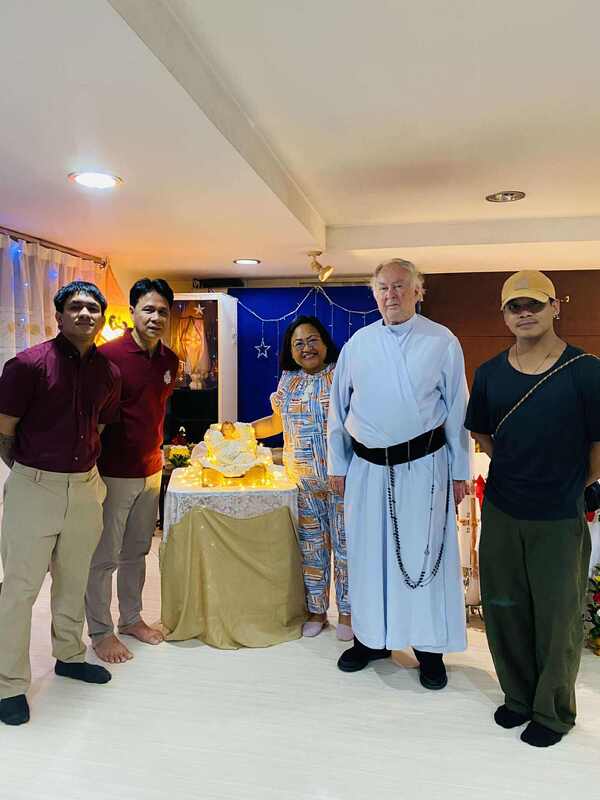 |
Authorfather of countless children Archives
December 2025
Categories |
 RSS Feed