|
EDante, 4 June 2017 Pentecost Sunday, AIT home
God first wants intimacy Let me begin this reflection with a story. A long time ago, there was a young prince who was looking for a lovely girl to marry. One day, as he drove from his palace to a nearby city, he had to pass through a rather poor area. He happened to see out of the window a beautiful young girl. He was attracted to her immediately. So he made several trips to the poor area over the next couple of days in order to see the girl from his car. Soon he began to feel that he was in love. But now he had a problem. How should he proceed to introduce himself? He thought he could order her to the palace and then propose marriage. But no, he felt he would not want to overwhelm the girl by his authority and power. He thought he could arrive at her door in his royal robe and with a bow ask her hand. No, it won’t work he thought. He wanted the girl to accept him for love. He thought he could pretend to be an ordinary boy and try to gain her interest. After he proposed, he could reveal his real self. But still, he felt that it would still be too dramatic. Finally, he said he would give up his princely role and move into her neighborhood. There he would take up work as a carpenter. During his work in the day and during his time off in the evening, he would get acquainted with the people, begin to share their interests and concerns, begin to talk their language. And in due time, should fortune be with him, he would make her acquaintance in a natural way. And should she come to love him, as he had already come to love her, then he would ask for her hand. Like any other fairy tale the story ended when the two got married and lived together forever. This is what God is trying to do with us. We know God as the great creator of the universe and humanity, as having great power and majesty and as one who reigns in heaven and earth. But few people realized that God is a great and persistent lover. Just like the above story, He is in love with us. Poor and wretched as we are, He emptied himself, taking the nature of a slave, and appearing in the form of man He humbled himself (Phil 2:6-8) to meet us on our own poverty that we might respond freely to His love. This wonderful truth is celebrated in the famous Christian song: “Jesus, lover of my soul, Jesus, I will never let You go, You've taken me from the miry clay, You've set my feet upon the rock. And now I know, I love you, I need you, though my world may fall, I'll never let You go, My Saviour, My closest Friend.” God is a lover and a friend. God loves us and He wants our love. But it had to be free and voluntary love. He could have ordered us to love Him but that would not be voluntary. He could have appeared to us in his princely glory, but he does not want to force us to obey. He wanted to win our love without overwhelming us by the magnificence of His divinity. Being a great Lover, the Lord always speaks of love to His beloved. His loving words and deeds are recorded in the bible. In fact, the entire bible can be summed up with just one word, i.e. Love. He also speaks love through prophets and mystics. My favourite loving words from God were spoken through St. John Chrysostom, Archbishop of Constantinople (349-407): “I your father, I your spouse, I your home, I your nurse, I your root, I your foundation. Whatever you want, I will be. You will lack nothing. I will labor for you. For I came to serve and not to be served. I will be your friend and your host, your head and your brother, your sister and your mother. I will be everything. Only be intimate with Me! I will be poor for you, errant for you, on the Cross for you, in the Tomb for you. Above I plead the Father for your sake, on earth I became intercessor to the Father for your sake. You are everything for Me, brother, co-heir, friend and member. What more do you want?” Even today, God continues to speak of His love. From the book True Life in God, the heavenly Father sings His love hymn for us: “I desired us to be united forever; you needing Me, loving Me and bound forever to Me and I bound to you; I who created you…and I who was first to lay eyes on you; I who filled you with My Spirit willed it; I will care for you; I will soothe you if in pain; I will cover you with My blessings; I will provide what you lack; I am Infinite Wealth; you need not fear with Me, I am He who holds the earth's foundations; leave Me free to do with you whatsoever I want; I am so happy having you near Me, you so frail and weak, for I know that your heart will let Me do as I please with you; fear not, for I am your Heavenly Father, and I love you beyond any human understanding; I am Yahweh and if you have not heard afore, I am telling you now, that I am known to be Faithful and My word stands secure; you must learn how I feel, how I work and how My love enkindles hearts; how else would you be able to tell My beloved children? I want you to be intimate with Me.” God first wants intimacy. He wants to be near and close with us much more than we have ever desire it. Our soul experienced the desire for God at its first encounter with Him at its creation. This encounter made a deep impression upon our spirit and caused an inner and lifelong desire for God. Therefore, it is a human need to seek and believe in God, much more than the need to eat and drink. However, man does not recognize this need so he ends up looking at something else with the hope of satisfying the need of his soul. Man experiences this feeling of restlessness and often asking himself what exactly it is I am looking for in life. St Augustine expresses this restlessness beautifully in his famous words: “My heart is restless until it finds its rest in Thee. My heart is restless until it finds its rest in Thee”. Today the Holy Spirit is speaking to us everywhere, inviting all us to respond to God’s love and call for intimacy. Intimacy is the key to the knowledge of God. It is the time of grace. God’s call is manifested powerfully in our time through the spiritual renewal movement within the church. It places an emphasis on intimacy with God and expressing the gifts of the Holy Spirit. Through this spiritual movement, communities and prayer groups have been formed. Members have experienced a new life within them and committed to practice a Christ-centred life. We have the proof that God still loves us and that He has sent His Holy Spirit powerfully in our time to say to us: “Come.” We must respond We must submit ourselves to Him. We have to open the door of our heart to grace and without any hesitation, fall in our Father’s Arms. We must allow God to reveal himself fully in us through an intimate and loving relationship. But how, you may wonder? It is not possible because we are sinners, you may object? The key is this: “go and sin no more” (John 8:11). Past is past, we can’t change it. But we can decide what we want to do in future. To sin no more requires a total change. In the church terminology, it is called repentance which comes from the Greek word Metanoia. It means a transformative change of heart and suggests change of mind and reformation of lives. The first critical step in repentance is the recognition of sin. Oftentimes we do not see our sins. Thus, we walk about life as if we are fine but actually we are on the path to hell. Let us learn a lesson from the life of Judas Iscariot, one of the twelve apostles of Jesus. Apart from his betrayal, the New Testament offers very little information about Judas. However, a tiny reference of him is found in John 12:6: “He said this (referring to Judas), not because he cared about the poor, but because he was a thief, and having charge of the moneybag he used to help himself to what was put into it.” The betrayal and eventual suicide was Judas’ greatest sin, but even before it happened he had sinned while in close proximity with Jesus for three years, witnessing many miracles to prove Jesus’ divine origin and listening to His powerful words that penetrate the hearts of many people in his time. While these were happening, Judas, in the middle of the night, when he thought he was all alone, stole money from the donations intended for the poor. But he was never alone. His fellow apostle, John, understood that Jesus knows everything (1 John 3:20). God knows what lies in the darkness (Daniel 2:22). Nothing can escape from God’s eyes. Judas’ story teaches us to guard against small, gradual failing that gain strength and power in our lives and that could open the door to more deadly sins. His story is also a great reminder that appearances can be deceiving. Remember what Jesus said: "Many will say to Me on that day, ‘Lord, Lord, did we not prophesy in Your name, and in Your name drive out demons and perform many miracles? ’Then I will tell them plainly, I never knew you; depart from Me, you workers of lawlessness"(Mt 7: 22-23). We need God to reveal to us the condition of our heart our sins whether through the scriptures, homilies, prophets and our own consciences through divine inspiration. It is the Holy Spirit who convicts us of our sin in the sense He convinces us of our sin. Once we recognize our sin through grace, we must cooperate with the Holy Spirit to repent by confessing our sins through the Sacrament of Reconciliation. Confession is essential because our sin affects the entire church. Sin is not a private matter. If one member suffers, all suffer together (1 Corinthians 12:26). Jesus has given the apostles and passed on through those ordained priests to absolve or forgive our sin through the Sacrament of Reconciliation by his command: "Whose sins you shall forgive, they are forgiven; and whose sins you shall retain, they are retain" (John 20:23). This rite removes the space of sin in our soul and fills it with grace, the Holy Spirit Himself. It also anoints those weak areas of our soul with new strength to resist temptation. It makes a person no longer a sinner. Our intimate union with the Holy Spirit is deepened every time we see our sin, repent and confess. To refuse to repent is to refuse the Holy Spirit’s entrance. Finally, the resolution not to sin again is necessary. It is an ongoing lifelong process to avoid sin at all costs. This is exactly where Jesus is leading us: to avoid sin and to live in an unceasing life of prayer. It is a precondition to an intimate and loving relationship with God. What are sins? Capital sins are pride, anger, lust, envy, gluttony, greed and idleness. There are sins against the commandments. Sins do not just happen and are not accident, they are willed. It is important to have nothing to do with them. Let us imitate St. Catherine of Genoa who after experiencing the horror of sins exclaimed: “No more world for me! No more sin!” To resolve not to sin again is a grace to be prayed for daily. Therefore, as we celebrate Pentecost Sunday today, let us pray: “Lord, send out your Spirit, and renew the face of the earth”. EDante, AIT Home, 11 June 2016
My late father-in-law is truly a great man. He epitomized a tender father, a loving husband, a wise adviser, and a devout Catholic. A few years before he passed away, a serious heart attack brought him into a near death experience. He recalled a brief moment of separation between body and soul. With the eye of his soul, he saw his laid body in an intense emergency room amidst doctors and nurses attending it. He felt an awesome peace of mind and relief from physical pain until his soul reunited again with his body. An American colleague told a similar experience. While working as a Peace Corps volunteer in the South of Thailand, he got severely hit by a motorcycle. Bones were broken and a lot of blood lost. He immediately lost consciousness and entered into a similar experience when his soul saw his broken body on the road and felt no bodily pain. It was a brief moment of separation and then as soon as the soul reunited with the body, for which he regretted very much, he suffered the pain. Stories like these ones abound and they provoke an examination of the true nature of man. In recent times, the body of man has been studied extensively, thanks to the advances in science and medicine. But the soul is much less understood, or totally rejected. Many people treat the soul as belonging to religion and playing no role in modern secular world. In the early centuries, the subject of the soul was well studied. Marsilio Ficino, a famous philosopher of the early Italian Renaissance, once asked: does not a man abuse the soul by not devoting himself to its study? Provoked by this question, I tried to capture in this piece the truth and insights about the soul that I had discovered through study, reflection and prayer. I truly believe that the truth and knowledge of God falls like rain from the sky. One just needs to get out in the open to get wet. The longer one stays in the open, the more one becomes saturated with the word of God. This echoes Isaiah's exhortation that just as from the heaven the rain comes down so shall the word of God be until it achieve the end for which it is sent (Isaiah 55:10-11). The soul is the true principle of life. In the beginning, God breath into the nostrils of Adam the breath of life, and Adam became a living soul (Genesis 2:7). Animals and plants also have souls because they are living beings, but quite different from human souls. The key distinction is that human souls are gifted with the spirit of God, but they (animals and plants) are not. Our souls are therefore rational and spiritual giving us superior intelligence and moral senses. St. Paul refers to both soul and spirit of man (1 Thessalonians 5:23). The spiritual nature of our souls makes it immortal, while animal souls become extinct upon death of the body. So the answer to the question, do dogs go to heaven, is absolutely no. The soul is the true nobility of man. It is the more superior part of man that belongs to God, the most pure Spirit. Because of his spiritual soul, man is eternal, powerful and holy. The nobility of man can’t be degraded even by a slightest degree because of race, color, nationality, culture, economic and social status. The poorest man is as valuable to God as the richest man in the world. The old beggar living in the filthiest slum belongs to God as much as the king in his golden throne. In the eyes of God, all men are equal in worth and dignity. As God is a King, all men are royalty. This is an incredible truth to behold. The soul is immaterial and incorporeal. It has no material or physical form. It can’t be grasped nor seen. But it exists. And it is possible to perceive it. When a man in a crowded train offers his seat to an unknown person, one can say that his act of charity is his soul. When a man forgives his wicked neighbor, consider that his forgiveness is his soul. When a son gives up his bad habits, out of love for his suffering mother, know that his sacrificial love is his soul. When a wise man comforts a confused person, you can say that his wisdom is his soul. When a sinful person repents, the triune God together with all heavenly beings rejoice in seeing his reviving soul. A soul therefore can be seen in everything that differentiates man from animals. The soul is immortal. It is created by God and destined to return to Him in heaven. In the book True Life in God, Jesus explained that our soul had seen God in a fraction of a second, the very moment of our creation. Referring to that message, Sr Anne Woods in her book "Invitation to be one with Christ" expressed beautifully this encounter: "It is this flash of the vision of the Father which was first seen at the instant of our creation that struck the spark of divine love in us and created a deep impression upon our spirit that it caused an inner desire to return into the Father's embrace. That single touch of His, as He created our souls, is that resonance that sends us into the lifelong and headlong dash and thirst to find and possess Him the Infinite Holy One. It is this once only, captivating moment of our creation that send us crying through life, "Father! Where are You?". According to the dictations of Jesus given to Maria Valtorta (Poem of Man-God), the soul is infused into the body when the baby is being formed inside the womb of the mother. The body plus the spiritual soul makes up a man, created in the image and likeness of God (Genesis 1:27) and the destiny of this man is heaven. The spiritual soul does not die, but the body does. To this effect, St. Matthew urged his followers to have courage against people who can kill the body, but are not able to kill the soul (Matthew 10:28). If it is preserved, the soul becomes perfect like its Creator and reaches its abode in heaven to reunite with God who gave it (Ecclesiastes 12:7). If sins overwhelm it, the soul suffers eternal punishment in hell. The soul is made to long for and love God. Solomon, known for his wisdom, expresses such longing in poetic language "I sought him whom my soul loves" (Song of songs 3:1). Such yearning is more essential than the need to breathe. Even those who says he does not believe in God, does believe. His innate yearning for God and for an understanding of the meaning of his existence can be expressed in believing in something else, perhaps in his own ego, science, sports, money and power. If a man didn’t receive the truth about God or perhaps chose to reject them, his yearning soul and believing mind would find alternative belief systems or even invent something else. As a subsequent to this, there are roughly 4,200 faith or belief systems in the world, according to some estimates. But only the true God and true religion can fulfill such longing. In its absence, the soul suffers because it longs for God, the True God, from Whom it comes, and it hungers for God. That is why it always calls on his body to endeavor to approach the true God. The soul is made to be formed and perfected, “as your heavenly Father is perfect” (Matthew 5:48). The soul is exactly the same in its origin and nature for all men. But they differ in its formation and accordingly to the perfection reached before death of the body. In the book Poem of Man-God, Jesus outlines three phases of the soul: “The first is creation. The second is a new creation. The third is perfection. The first is common to all men. The second is peculiar to just people who through their will elevate their souls to a more complete revival, joining their good deeds to the perfection of God's work, whereby their souls are spiritually more perfect and form a connection link between the first and third ones. The third is peculiar to the blessed souls, or saints, if you prefer so, who have exceeded by a thousand degrees the initial stage of their souls, a stage suitable to man, and have transformed them into something suitable to rest in God”. With the help of God and cooperation of man’s will, a soul needs to be carried higher and higher on the three steps. The soul in grace possessing love, and by possessing love it possesses God. In scripture (John 14:13), Jesus said that "If anyone loves Me he will keep My word, and My Father will love him, and we shall come to him and make Our home with him”? The soul in grace therefore possesses knowledge, science, wisdom and light. Anyone who wanted to know God and to understand certain things in life can speak to his soul and ask for spiritual truths. These conversation between man and his soul filled the silence of prisons, the silence of cells, the silence of hermitages, the silence of the rooms of holy sick people. Such conversations were the consolation of prisoners awaiting martyrdom, of cloistered monks and nuns searching for the truth, of hermits longing for an advanced knowledge of God, of sick people in bearing, nay, in loving their crosses (Poem of Man-God).. In April 2012, Moonyeen and I visited Assisi of Italy, the hometown of St. Francis. Francis founded the Franciscan religious order in 1208 and is one of the most venerated religious figures in Catholic history. His life, work and words are inscribed everywhere in Assisi's medieval castles, churches, amphitheaters and piazzas (town squares). But what captured my soul the most were the words, not of St. Francis, but of his disciple, St Clare, inscribed on the walls of the Basilica of Saint Clare that say: “He who feeds the birds of the heavens and clothes the lilies of the field will not fail you in either food or clothing; Ever since I have known the grace of our lord Jesus Christ no suffering had been bothersome no penance too severe no infirmity has been hard”. With these powerful words, one can perceive the maturity and perfection of soul by its absolute trust and submission to God’s will. EDante. Tharae, Northeast Thailand
We believe that a Christian is primarily somebody who believes in God. So one would know a Christian by his Faith. Now, about the Blessed Virgin Mary, I want to say that she is the one who perfectly believes in God. The Catholic Church teaches us that just as Mary is the Mother of love and hope, so she is also the Mother of Faith. Because of that the opening of the Year of Faith happened at the Feast of Mary, Most Holy, Mother of God, on 11 October 2012. At that same day, Pope Benedict entrusted the Year of Faith to her. What does that mean? It means that she is our model of faith and she is ready to support us in living out fully the Year of Faith. You may ask why the church calls Mother Mary the Mother of Faith? Well, we can simply read directly the Holy Bible. It does not take much to recognize Mary as our model of faith. It all begins, of course, at the Annunciation, when the Angel Gabriel visited Mary. The Angel said that the Child to be born of her was to be the Messiah, was to be the Son of God. That is the Gospel that was proclaimed to Mary. And Mary believed the Gospel. Mary was the first Christian believer because she accepted the Gospel as it was presented to her. Then, Mary went to visit her cousin Elizabeth. The Church believes that Mary here was following the inspiration of the Holy Spirit and she believed. It was her faith that led her to visit and assist her cousin Elizabeth. And this is what a Christian should be – always ready to listen and obey the inspiration of the Holy Spirit, and help people in need. When Mary entered Elizabeth’s house, as you knew, at the sound of Mary’s voice, Elizabeth was filled with the Holy Spirit. Elizabeth then said “Blessed are you among women, and blessed is the child in your womb!” Finally, Elizabeth said “And blessed is she who believed that what was spoken to her by the Lord would be fulfilled!” You see Elizabeth understood that something wonderful had happened in Mary’s life. She recognized Mary as blessed because Mary had faith in what God had spoken to her through the Angel Gabriel. Of course, Mary’s response was the Magnificat – “My soul magnifies the Lord, and My spirit rejoices in God, My Saviour”. For nine months, Mary carried Jesus in Her womb. Any pregnant mother naturally tends to think a lot about the child that she is bearing. In the case of our Mother Mary, she was contemplating on her first Child, Jesus. Jesus is the focal point of everything that she thinks of. Jesus was the center of her life. This is how faith looks like. It is a life centered in God. After nine months, Jesus was born, and Mary now not only thought of Him, worshipped Him, but now She could hold Him in Her hands, carry Him, She could see Him, She could hear His cries. Mary did not understand everything about Her Son. When Jesus was lost in the temple, she asked Him, “Son, why have you done this to us?” Mary was living in faith as we all are living in faith. There were things she didn’t understand – that is part of a life of faith. But the Holy Spirit inspired Mary so that she took into her heart what Jesus said even when she did not understand it, and she meditated on it. The time came when Jesus must leave Mother Mary to go about the preaching of the Gospel to others. That must have been a very painful time for Mary. But she responded well by saying “Let it be done according to Thy Word”. This is God’s will, and this Mary accepted without resistance, painful as it was. Those are the things about the faith of Mary that we can find as we read the bible. Even with these few passages in the bible, it is clear that Mother Mary is indeed a model of faith, and thus she is called the Mother of Faith. I would like to conclude with what Saint Augustine says about the Blessed Mother Mary. Saint Augustine said "It was Mary's faith that opened heaven to men when she agreed to become the mother of Jesus”. EDante, AIT home, 13 February 2016
This reflection begins with the famous Old Testament story of David and Goliath that we loved very much when we were kids. From this story, I wanted to draw lessons in overcoming difficulties in life. David and Goliath The story is related in chapter 17 of 1 Samuel. The Philistines were stationed on one hill and the Israelites on an opposite hill, with a valley between them. The Philistines were much stronger, experienced and dangerous fighters. Due to the terrain, however, neither of them dared to attack first as it requires one to descend down the hill and then makes a suicidal climb to the enemy’s hill. Finally, the Philistines had enough. They decided the terms to resolve the deadlock through a one-on-one combat. The Philistines sent their greatest champion down in the valley. His name is Goliath, six and half feet tall wearing bronze helmet. He carried a javelin, spear, and sword. He had a shield-bearer near him. Goliath humiliated and challenged the Israelites for a one-on-one battle. The Israelites were terrified. No one stood up to the challenge. After some time, a young shepherd boy David came to the army camp to bring food to his brothers. He heard about the challenge and came forward to volunteer. King Saul, the leader of the Israelites, refused because he was just a boy. But David was determined. He had fought before against more dangerous enemies, like lions and bears, who attacked his sheep from the herd. Saul was obliged. He had no options anyway. So David descended from the hill towards the giant standing in the valley. Thus began the history’s most famous battle. David defeated Goliath. The story teaches us how to behave when faced with difficult problems. There are many challenges in life from misfortunes, sickness and accidents to separations, bankruptcy and unemployment. These can become our own giants that cause distress, anguish and fear. So let us draw some lessons from the story of David and Goliath and other people in the bible on how they overcame their giants in life. You will have problems Christian life is not an escape from problems. Problems are very much part and parcel of ordinary life. Jesus warns us that “in this world you will have problems” (John 16:33). God does not intend to remove problems from our lives, but rather helps us overcome them. Our problems are closely linked with our fallen nature. At the time of David, the Israelites lived under the presence and guidance of God through the prophet Samuel. Upon their request, God anointed Saul, the first king of Israel, “This is the man of whom I told you, he is to govern my people” (1 Samuel 9:17). In spite of this, God allowed the Philistines to inflict difficulties in Israel. Joseph, the son of Jacob (Genesis 37) is another character in the Old Testament who encountered great problems. Joseph went to look for his brothers in the desert. But the brothers betrayed him and sold him into Egypt as slave. While working as a slave, Joseph was tempted by the wife of his Egyptian master, Potiphar. He ran away from temptation, and yet was accused wrongly and put in prison. Even with all these problems, Joseph remained faithful to the Lord. The New Testament tells us of the life of suffering that Jesus lived from the moment of birth to his death on the cross. At the peak of Mary’s pregnancy, the couple had to walk from Nazareth to Bethlehem in extreme cold weather. When they arrived, they found no place in town to give birth to Jesus. When Jesus was a few months old, they were forced to flee to Egypt to escape from Herod’s slaughter of children. They lived as refugees in a desert place in Egypt for about four years. When they returned to Nazareth, they survived with meagre means and suffered persecutions. At the age of 13, I left my parents’ village to attend high school in the city where my grandparents had lived. At that time, their clothing business was heading towards bankruptcy after decades of success. They started selling off other properties to keep the business alive. My old grandparents were too occupied with the family business to look after me. Oftentimes, I found myself with meagre food and money, and with nominal parental care. I soon learned what other poor kids had done to survive -- selling newspapers in the street, collecting trash for cash and accepting shoe cleaning services. I managed to stay in high school for two years, helped with the little income I had earned, and experienced the burden of living alone and uncared for at a very young age. This experience turned out to be a crucial turning point in my life. I learned the most important lesson of responsibility, independence, survival and the value of work and money. But do not create problems Yes, we often create our own crosses. These are self-inflicted problems. Gambling results in financial problems, thief and other crimes. It also affects relationships and health. Smoking can cause cancer and many other related diseases. About half a million people die each year in the United States due to smoking cigarettes or being exposed to cigarette smoke. Alcoholism leads to social and health problems, loss of job and bankruptcy. Alcohol use can affect all parts of the body, but particularly the brain, liver, pancreas and immune system. Flirting results to sexual sins and divorce. Social media enhances interactions between sexes that at times develop into an illicit relation. Materialistic behaviour or consumerism leads to financial problems and poverty. Hatred leads to a bitter life devoid of peace and joy. Problems occur out of our own habits. They can be prevented by living according to Christian principles. About a month ago, I decided to quit coffee. I had been drinking coffee on a daily basis for about seven years. I knew that coffee has negative effects on health. It causes stress and tension. It also causes long term health problems affecting the heart, lungs, stomach and skin. Although my consumption was minimal, the diuretic effect of caffeine started to bother me. I had to go to the toilet after each cup of coffee. The final straw happened when I was caught in a heavy traffic with the urge to go to the toilet because of coffee. I felt it was not worth the trouble anymore so I decided to quit. Now I am feeling much better without the effect of caffeine. Externally-inflicted problems also exist. Natural disaster is one of them. Many people lost property, love ones and means of living in a matter of days as a result of typhoons, earthquakes, floods and others. Accidents in many forms occur daily shattering many lives. They happen beyond our own influence and unexpectedly. Economic crisis also causes unemployment. As problems can’t be completely avoided, one must therefore learn to live with them and accept any consequences. This attitude helps one to remain calm and sensible when confronted with difficulties. If problems come, face them Going back to the story of David, King Saul prepared David for the fight. He dressed him with his own garment and gave him a sword and helmet. David took them off because he was not used to wearing them. Instead, he took his staff in his hand, pick up five smooth stones, and put them in the bag, with his sling in his hand, and then approached Goliath. When seeing a boy, healthy and handsome, Goliath laughed at David saying “Am I a dog that you come to me with sticks?” David replied, “You come against me with sword and spear and javelin, but I come against you in the name of the Lord. This day the Lord will deliver you into my hands, and I’ll strike you down and cut off your head.” After the short conversation, the story goes on to tell how David struck Goliath with a stone using his sling in just one attempt. Goliath fell to the ground unconscious and David killed him with Goliath’s own sword and declared victory for Israel over the Philistines. Let us try to unravel David’s secret. Goliath expected a man-to-man combat through human strength and handheld weapons. David knew that he had no chance of defeating Goliath in that manner. He recognized his weakness and lack of experience in a man-to-man battle. What David had were stones and a sling. It required extraordinary skills and practice to master this weapon. Once it is mastered, it became a very devastating weapon. From my research, I learned that slingers of the old days can hit a bird in flight. They could also hit a coin from as far away as they could see it. An experienced slinger could kill or seriously injure a target at a distance of up to 100 meters. Being hit by a stone from a slinger is like being hit by a baseball from a pitcher. This was precisely how it had happened when David struck Goliath. When the stone hit Goliath, it sank into his forehead. In reality, Goliath had no match against David. His javelin, spear and sword were absolutely useless and his strength was meaningless against David’s weapon. Although David possessed a powerful weapon, they were nothing compared to his weapon of faith. He came armed with trust in God which he learned while tending his father's sheep: “the Lord who rescued me from the paw of the lion and the paw of the bear will rescue me from the hand of this Philistine.” David’s faith gave him the courage to fight Goliath. David believed that Israel was guided by God. He considered Goliath’s mocking against the Israelite army as a great insult to God. David’s faith was his greatest secret in dealing with his giant. In 1993, while at the Asian Institute of Technology in Bangkok for my graduate studies, I was offered a short-term assignment with the United Nations, which continued for at least the next ten years. My employment was based on short-term and temporary contracts, at times for one month duration with no extension guaranteed. UN policy barred me from being considered for any permanent positions because my nationality was already over-represented in the UN secretariat. I accepted the reality that my temporary employment in the UN would not last and prepared myself for any eventual worst scenario, such as pulling all my five children out from international schools, if necessary. It also gave me great comfort to recall God's promise -- “do not worry about your life, what you will eat or drink; or about your body, what you will wear. Is not life more than food and the body more than clothes?” (Matthew 6:25). The key to keep my peace was complete trust in the Lord and acceptance of my insecure employment situation. I have overcome the world While Jesus warns us of our problems, he also comforts us of his grace: “In this world you will have problems. But take heart! I have overcome the world” (John 16:33). Jesus was tempted in the desert. He was mocked and abused by the authorities. He was rejected and humiliated by different groups of people. One of his apostles betrayed Him. In the end, he suffered and died on the cross. From a human point of view, he failed in his trials. But this was not so. He overcame his trials by remaining faithful until the end. He embraced them without resorting to any sinful actions. Jesus therefore overcame the world. Many of us lack patience when faced with difficult trials. We easily become overwhelmed with the emotion of anger, fear and anxiety. Yet these emotions hamper our ability to make sensible and rational decisions. We easily lose our resolve to remain kind, gentle and compassionate, and resort to revenge, anger and hatred. Peter, the Apostle, explains that “these trials will show that your faith is genuine. It is being tested as fire tests and purifies gold--though your faith is far more precious than mere gold. So when your faith remains strong through many trials, it will bring you much praise and glory and honour on the day when Jesus Christ is revealed to the whole world” (1 Peter 1:7). David reinforces the same truth: “You tested us, O God, tried us as silver tried by fire” (Psalm 66:10). Finally, in his book Imitation of Christ, Thomas a Kempis says: “It is good for us to have trials and troubles at times, for they often remind us that we are on probation and ought not to hope in any worldly thing.” My wife and I have devoted many years in the community of Couples for Christ. In this group, we have witnessed the lives of many families and the trials they are facing: financial troubles, joblessness, divorce, infidelities, marital quarrels, loneliness, depressions and the like. However, there was one particular experience that had left a very deep impression in us. It occurred about seven years ago to a young couple in the community. At that time, they were a very happy couple blessed with a newly born baby. When the baby reached 3 months old, the most terrifying thing a parent could ever experience had happened -- the baby died in his sleep, with no prior warning or signs of illness. The doctor had no explanation. The loud cry and devastating agony of the young parents were excruciating. The community helped in all possible ways to comfort them and made all arrangements for the funeral. A little more than a year after the terrible incident, the same couple had another baby. The second baby also died suddenly at the age of 3 months. No words could describe their pain. Some of us in the community witnessed the moment when the doctor had tried to revive the lifeless infant to no avail. In the end, the doctor blamed a genetic defect causing these deaths. After these terrible experience, the couple left to their home country to start a new life. About a year ago, I was amazed to hear that they had returned to Bangkok with a 3-year old child for a short holiday. I believe that their time of trial was over and glad to see them victorious. In conclusion, we must prepare our hearts to confront our giants. When problems come, we must find the courage to embrace them with patience and faith to invoke the Lord to strengthen us and seek his help. Abandoning the situation or just giving up is not an option. We must face our problems with the right attitude. For my brothers and sisters who are trying to serve God, we have learned that Jesus did not promise to make our lives as beautiful as a flowery carpet or easy and glorious from a human point of view. His way, his service, his work is sacrifice, renunciation and sorrow. As Jesus said, "Whoever wants to be my disciple must deny themselves and take up their cross and follow me.” (Matthew 16:24). It is not easy to become good. In fact, it is the greatest labour. But the reward is heaven and it is therefore worthwhile getting exhausted in such labour.  EDante, 25 December 2015 This year my UN work brought me to two of the most isolated countries in the world, North Korea and Iran. Although I visited these places before, this time I had the opportunity to explore the newly renovated war museum and art gallery in Pyongyang. They impressed in me the suffering and heroism of the North Koreans under the Japanese occupation and the war with their Southern kinsmen; the pain of the "comfort women"; the pride of the nation during the victorious seizure of the American spy ship USS Pueblo in 1968; the hardship of the people in rebuilding their devastated lives, and the struggle of the leaders to develop the country into a modern nuclear nation . Central to the life of the North Korean people lies with their “Great leader” and “Eternal President” Kim Il Sung who had ruled the country since its establishment in 1948 until his death in 1994. His grandson Kim Jong Un now leads the country with absolute power. People praise Kim and sing hymns about him like he is a divine being, a god. A month later I found myself strolling with friends in a freezing night at Tehran’s Laleh Park, a well-kept and beautiful green area next to our hotel. The presence of a multitude of lush shady trees in the park was a real contrast to this city’s mostly arid landscape. While walking, I had a stimulating conversation with a Muslim colleague. He explained that one major difference between Islam and Christianity is their view of Jesus. To Christians, Jesus is the Son of God. He is both the Son of God and an inextricable part of God. Muslims believe that he was a true prophet but not the Son of God. I added that the Jews believe that Jesus was a false prophet and thus liable to die on the cross. He explained that the revelation that Muhammad received from an angel is the authentic scriptures, while the old and new testaments of the Christians had been modified over the years and no longer resembled the true revelation of God. Muslims believe that Jesus did not suffer on the cross because Allah saved and took him to heaven and therefore do not accept the concept of a redeemer or saviour of the world. After the trip in Iran, I received from him a copy of Quran in English to read and I soon found the following verse revealing how Quran sees Christians and Jews: “O you who believe, do not take the Jews and the Christians for friends; they are friends of each other; and whoever amongst you takes them for a friend, then surely he is one of them; surely Allah does not guide the unjust people." (Quran 5:51). During the Christmas week, an intern to the UN who lives near my home came to ride with me to office for several days. She is a Buddhist who was exposed to Christian teachings from her school days at a Christian school in Sri Lanka. She participated in the annual UN Christmas carols that I helped organize with friends. According to her, her religion teaches detachment from consumerism and simple living within one’s meagre means. It was consoling to hear such devotion from a young person. She said that Buddha did not want his followers to worship him although some Buddhists revered him like a god. She believes in the cycle of reincarnation to different life forms, depending on how good or bad one lives his/her life. I expressed my view that human reincarnation to a lower form like plants and animals is difficult to comprehend from a Christian mind-set because we believe that man has a spirit, which gives us the capacity to reason and believe in a divine being, while plants and animal do not have it. Further, I wondered if this belief would make a person hesitant to eat any meat or vegetable as it may belong to an ancestor. So why are there so many beliefs? Isn’t there only one God and one true revelation? Why are there contrasting messages and varying interpretations of religious teachings? Isn’t the one God gives the same divine messages to all His children from ancient times through today? One can perhaps consider human nature that makes different people listening to the same story to come away with very different meanings. It also leads people of different times and cultures to hear divine inspiration differently, according to their own cultural and spiritual conditions. Fundamentally, human mind is made to believe. Such need is more essential than the need to breathe. Even those who says he does not believe, does believe. He believes in something else. If he does not believe in God, he perhaps believes in his own ego. If man is not presented with the full revelation of God, his believing mind has the capacity to generate images and ideas of divine life and God which, if accepted, form part of his faith and belief system. Some people do not want to believe in a God who demands righteousness and morality, so they invent a God who makes no such requirements. According to some estimates, there are roughly 4,200 faith or belief systems in the world. Another important point to consider is the presence of two opposing spiritual forces, as Jesus explained through this parable: “The kingdom of heaven is like a man who sowed good seed in his field. But while everyone was sleeping, his enemy came and sowed weeds among the wheat, and went away. When the wheat sprouted and formed heads, then the weeds also appeared. The owner’s servants came to him and said, ‘Sir, didn’t you sow good seed in your field? Where then did the weeds come from?’ An enemy did this,’ he replied. The servants asked him, ‘Do you want us to go and pull them up? No,’ he answered, ‘because while you are pulling the weeds, you may uproot the wheat with them. Let both grow together until the harvest. At that time I will tell the harvesters: First collect the weeds and tie them in bundles to be burned; then gather the wheat and bring it into my barn.’” (Matthew 13:24-30) Man needs to discover by God's grace the authentic divine revelation and strive to live according to the truth. Each one who seeks the truth must face the painful reality of the presence of evil spirit that causes confusions, divisions and conflicts. Each one must always test the spirit of any beliefs and actions and determine if they are influenced by good or evil. Therefore it is written: “Dear friends, do not believe every spirit, but test the spirits to see whether they are from God, because many false prophets have gone out into the world” ( 1 John 4:1). "Beware of the false prophets, who come to you in sheep's clothing, but inwardly are ravenous wolves. You will know them by their fruits. Grapes are not gathered from thorn bushes nor figs from thistles, are they? So every good tree bears good fruit, but the bad tree bears bad fruit. A good tree cannot produce bad fruit, nor can a bad tree produce good fruit. (Matthew 7:15-20) Even today, many people have claimed to receive revelations from God or from an angel, yet only a few have proven to be true. False prophets can give 99% truth and inject 1% evil in order to poison their followers. It is important to learn how to discern the authentic revelations against the false ones. Christians believe that Jesus is the true revelation of God because through him God has communicated to us the fullness of divine truth. In the Old Testament, God spoke to humanity by his prophets but in these last days He has spoken to us by his Son (Hebrews 1:1-2). The incarnation of Christ was an immense generosity on God’s part to lead us to the true revelation. We believe that Jesus is 100% human and 100% divine. In Jesus, one can see the image of the invisible God (Colossians 1:15). Those who do not believe in Jesus still see the invisible and inaccessible God in the Old Testament. Even the mere mention of God’s name brings them to a paralyzing fear. But those who believe in Him and His Words become children of God and experience intimacy with Him as it is written: But when the fullness of time had come, God sent forth his Son, born of woman, born under the law, to redeem those who were under the law, so that we might receive adoption as sons. And because you are sons, God has sent the Spirit of his Son into our hearts, crying, “Abba! Father!” So you are no longer a slave, but a son, and if a son, then an heir through God. (Galatians 4:4-7) As we busy ourselves in celebrating Christmas, I wish that we can find time to reflect on the incarnation of God into man through Jesus out of the greatness of His mercy and love for mankind. May the following story a friend shared with me help focus our thoughts on the true meaning of God’s action at Christmas: There was once a man who didn't believe in God. His wife did believe, and she raised their children to have faith in God and Jesus. One snowy Christmas Eve, his wife was taking their children to a Christmas Eve service where they lived. She asked him to come, but he refused. "That story is nonsense!" he said. "Why would God lower Himself to come to Earth as a man? That's ridiculous!" So she and the children left, and he stayed home. Later, the winds grew stronger and the snow turned into a blizzard. As the man looked out the window, all he saw was a blinding snowstorm. He sat down to relax. Then he heard a loud thump. Something had hit the window. He looked out, but couldn't see more than a few feet. When the snow let up a little, he ventured outside and saw a flock of wild geese. Apparently they had been flying south for the winter when they got caught in the snowstorm and couldn't go on. They were lost and stranded on his farm, with no food or shelter. They just flapped their wings and flew around the field in low circles, blindly and aimlessly. The man felt sorry for the geese and wanted to help them. The barn would be a great place for them to stay, he thought. So he walked over to the barn and opened the doors wide, then watched and waited, hoping they would notice the open barn and go inside. But the geese just fluttered around aimlessly and didn't seem to notice the barn. The man tried to get their attention, but that just seemed to scare them and they moved further away. He went into the house and came with some bread, broke it up, and made a breadcrumb trail leading to the barn. They still didn't catch on. Now he was getting frustrated. He got behind them and tried to shoo them toward the barn, but they only got more scared and scattered in every direction except toward the barn. Nothing he did could get them to go into the barn where they would be warm and safe. "Why don't they follow me?!" he exclaimed. "Can't they see this is the only place where they can survive the storm?" He thought for a moment and realized that they just wouldn't follow a human. "If only I were a goose, then I could save them," he said out loud. Then he had an idea. He went into barn, got one of his own geese, and carried it in his arms as he circled around behind the flock of wild geese. He then released it. His goose flew through the flock and straight into the barn -- and one by one the other geese followed it to safety. He stood silently for a moment as the words he had spoken a few minutes earlier re-played in his mind: "If only I were a goose, then I could save them!" Then he thought about what he had said to his wife earlier. "Why would God want to be like us? That's ridiculous!" Suddenly it all made sense. That is what God had done. We were like the geese -- blind, lost, perishing. God had His Son become like us so He could show us the way and save us. That was the meaning of Christmas, he realized. 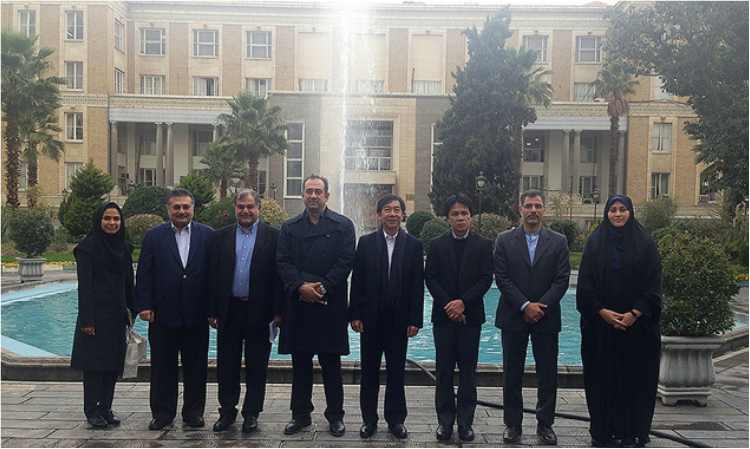  EDante - 25 December 2014 The Christmas mass at the Asian Institute of Technology (AIT) hasn’t changed much since we arrived here 25 years ago. Father Joe was there; the community was packed with colorful attire, and the altar in front was richly decorated. The stories and liturgy were nothing new. As always, Father Joe began with a touching narrative of how many years had passed from important biblical and historical events to the birth of Jesus. It is called the Christmas Martyrology (also known as the Christmas Proclamation): “In several thousand years after the flood, when God made the rainbow shine forth as a sign of the covenant. Twenty-one centuries from the time of Abraham and Sarah; thirteen centuries after Moses led the people of Israel out of Egypt. Eleven hundred years from the time of Ruth and the Judges; one thousand years from the anointing of David as king; in the sixty-fifth week according to the prophecy of Daniel. In the one hundred and ninety-fourth Olympiad; the seven hundred and fifty-second year from the foundation of the city of Rome. The forty-second year of the reign of Augustus; the whole world being at peace, Jesus Christ, eternal God and Son of the eternal Father, desiring to sanctify the world by his most merciful coming, being conceived by the Holy Spirit, and nine months having passed since his conception, was born in Bethlehem of Judea of the Virgin Mary. Today is the nativity of our Lord Jesus Christ according to the flesh.” I found the above timeline very powerful in seeing Christmas as a real event in history, and not just a story of faith. It locates the birth of Christ in a concrete time period and place. Like any human being, Jesus was born in a specific time and place. The time of His birth is a turning point in history. Since then, time has been measured as either before His coming, which is called BC, and after it, or AD. Anybody following the Gregorian calendar has their time of birth attached to the birth of Jesus. Thus, my year of birth in 1965 signifies that 1,965 have already passed since the time of Christ. This is a strong reminder of the significance of Christmas in our life. The place of birth is also of interest. It is a small town called Bethlehem which still exists under the same name. The bible tells that the place of birth was pre-determined and pre-announced: “In Bethlehem of Judea, for thus it has been written through the prophet (Matthew 2:5)”. Why Bethlehem? It was the hometown of king David whom God promised that the savior be born from among his descendants and that this savior’s Kingdom will last forever. In Hebrew, the word Bethlehem means “House of Bread”. Interestingly, Jesus presents himself as the bread of life: “I am the bread of life, whoever comes to me will never hunger, and whoever believes in me will never thirst (John 6:35)”. This bread as we know is the word of God which is food for the soul. Jesus stressed this point: “It is written: ‘Man shall not live on bread alone, but on every word that comes from the mouth of God (Matthew 4:4).’” At the time of Jesus, Bethlehem was the smallest town of Judah. It was under the occupation of the Roman Empire whose emperor was the mighty Caesar. Upon his order, a census was administered requiring all inhabitants to register in their place of origin. Joseph and Mary were among the crowd of people who travelled to Bethlehem to enroll. The narrow road leading to Bethlehem was very crowded. Little donkeys, loaded with goods and people, were going towards the town. Other people were travelling on foot fast because it was cold. Joseph and Mary travelled by donkey from Nazareth. A long and tiring journey especially during the cold season and for a pregnant woman. Upon their arrival, they looked for a room to stay but could not find one. Joseph implored to some of the travelers to give Mary, who was about to give birth, a place to stay for the night. He begged them to have mercy. The fact that they came from Galilee did not help since Galileans were discriminated at that time. Upon the advice of some shepherds they met on the road, they went towards the country and found a stable, which was used by merchants to keep their animals. This damp and cold stable became the birth place of Jesus and a symbol of God’s infinite humility. Today, Bethlehem is far remote from its past glory. It is again a besieged town surrounded from three sides by a 25 foot high concrete wall. It has a population of about 22,000, of which 18 per cent are Christians. In and around Bethlehem there are some 32 physical barriers to Palestinian movement erected by Israel, including checkpoints, roadblocks, dirt mounds, and gates. In June 2012, the Church of the Nativity, where Christians believe Jesus was born, was named by UNESCO as an endangered heritage site. Reverend Dr. Mitri Raheb, a pastor of the Lutheran Christmas Church in Bethlehem, said that “if Jesus were to be born in Bethlehem today, he would not be born in Bethlehem. Mary and Joseph would not be allowed to enter from the Israeli checkpoint, and so too the Magi. The shepherds would be stuck inside the walls, unable to leave their little town. Jesus might have been born at the checkpoint like so many Palestinian children while having the Magi and shepherds on both sides of the wall.” As we reflect upon the time and place of the birth of Jesus, we can’t help but marvel at the significance of the event. Christmas is the fulfillment of the numerous acts of God and his people from the time of creation. It is the culmination of centuries of expectations and waiting for the promised savior. Mighty prophets of old spoke oracles after oracles about the coming of the Messiah. What exactly happened at Christmas? It was when God decided to be amongst men on earth, and no longer a remote God in heaven. Suddenly, men no longer need to look at heaven to worship God, but simply look at the people around him to perceive Him. It was when God made heaven here on earth. It was when God became accessible and visible to men. It was when God opened the gate of Heaven for men to enter. John the apostle summed it up nicely: “For God so loved the world that He gave His only begotten Son, that whoever believes in Him shall not perish, but have eternal life. For God did not send the Son into the world to judge the world, but that the world might be saved through Him (John 3:16-17)”. Christmas is a great act of God towards man. Using the words of Mother Mary, Jesus’ birth was “…infinitely simple and infinitely great,” and “the greatest thing on the earth, concealed under very ordinary appearances.” Christmas, regardless of what we do, is very special. Please enjoy your holidays, but also stop, listen and reflect on the story of Jesus’ birth and the significance of the event. 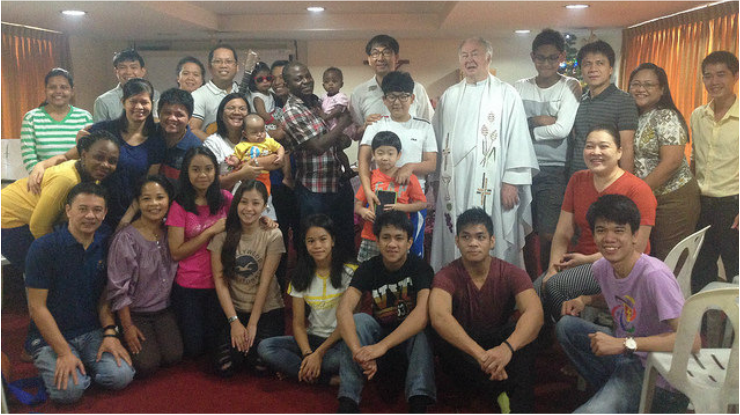 |
Authorfather of countless children Archives
December 2025
Categories |
 RSS Feed