|
EDante - 25 December 2013
Recently, I found myself constantly pondering about the word “peace”. Expressions like “unspeakable joy”, “immortal gladness” and "eternal happiness" we heard as we busied ourselves singing carols during the cool nights of December also made me wondered what these words meant for the soul. Does peace bring about joy? The Christmas story of a multitude of angels descending to the cold and lowly Bethlehem during the birth of Christ tells of the glorious song “peace on earth to men of good will”. It was a song of worship to the baby who is to be called the “prince of peace”. Many hundred years before that, prophets of old believed that the “Emmanuel” would come when the whole world is at peace. But many Jewish religious authorities argued that there was no peace when the angels came. The entire Palestine was under the imposing military rule of the Roman Empire. They were persecuted and heavily taxed. Jewish insurrections against the Romans were common and were easily crushed by the mighty power of Rome. In the midst of that, God appointed that time for the birth of His Son. In the mind of God, without peace, it was not possible for the mighty Caesar Augustus, Emperor of Rome, to declare a general census throughout the entire Roman occupation. Without peace, it was not possible for Mary and Joseph to travel from their home village in Nazareth down south of Bethlehem. Without peace, it was not possible for the Jews to practise their religion and worship in the temple in Jerusalem. There is also another kind of peace. Have you ever seen the peaceful, rolling stream of a river? Have you gazed recently at a vast valley and wondered at the beauty of nature? Have you recalled how you felt when resting in a beautiful garden? Modern studies show that being out in nature actually has a positive impact on your physical and emotional health. In other words, one can find peace by being out in the nature. In Isaiah 66:12, the Lord says, “Behold, I will extend peace to her like a river and the glory of the nations like an overflowing stream.” The first man and woman, Adam and Eve, lived in a garden called “Eden” where nature served as their original habitat. Along with that, peace reigned in the hearts of our first parents. But when sin was consumed, they were evicted out of the garden to live in a harsh environment. It was no longer the lush and abundant Garden of Eden. Extreme climate and poor ground conditions made it difficult for plants to thrive. God declared the punishment: “Cursed be the ground because of you! In toil shall you eat its yield, all the days of your life! Thorns and thistles shall it bring forth to you as you eat of the plants” (Gen 3:17-19). This month, my work in the United Nations brought me to Yangon, Myanmar. About two years since it began a major political and economic reform, the city has turned into a beautiful garden with landscaped boulevards, century-old trees lining the streets, and serene lakes turned into green parks. Yangon no longer resembled the city I visited in 2009 just after it was ravaged by Cyclone Nargis. “You know Yangon is known as the Garden city of Asia”: our local host proudly said. If I heard that before, I would have doubted. But that time, Yangon was indeed a beautiful garden. City streets were well landscaped, multitude of plants decorated the side streets, and well trimmed ornaments covered the city parks. Our unimpressed UN partner argued it was because of the South-East Asian games that the nation was hosting for the first time. Yet, there is a greater kind of peace. “Peace I leave with you; My peace I give you. I do not give to you as the world gives” (John 14:27). Divine peace is a gift. God gives it when we do acts of real love and mercy. It is not the absence of war. It is God's peace, the peace that comes from the heart of the Risen Lord, the peace that has defeated sin, fear and death. It is a peace that persists even in pain and enables hope to blossom. It is a peace that can help to calm the storms stirred up by trouble-makers. Who is peaceful spreads his peace to others without uttering any words. It is a peace that makes one find God who is peace himself and become a child of God as scripture says, "blessed are the peacemakers: for they shall be called the children of God" (Matthew 5:9). So today at Christmas day, I felt divine peace. For almost a decade, my family, together with a small group of friends from the AIT Catholic Community, has spent Christmas day in the slums of Klong Toey together with orphaned children under the care of Father Joe Maier through the Mercy Center. Joyful Christmas songs led by the largely Filipino choir were sung after the solemn Thai mass. It was amazing to see Thai children singing along confidently in English the Jingle Bells and the Santa songs. As I gazed at Father Joe while he was saying mass, I reflected on the great things this person has done in life. He has devoted his entire adult life to help the poor and abandoned children and gave them not only a place to stay but also love. How much peace must he have received? Long ago, exactly on 10 June 2006, I was in the small village named Tharae, some 800 km northeast of Bangkok. While resting in a small park by a lake, I started to scribble: “All laborers deserve a rest. After a long night trip from Bangkok to this far away village, after a day of speaking with Thai people in English with translation, after taking a spicy Thai lunch mixed with some Lao food, I am here by the beautiful lake of Tharae. In this small yet lovely garden park, sitting with both my feet fully stretched out, gazing as far as the other side of the lake, and savoring the natural serenity and beauty of the place, I felt so much peace both outside and inside me. There was peace that the world cannot give but can only come through clear conscience and service to God. Let me dwell in this peace forever; evermore let this peace continue to grow until it reaches the pinnacle of peace that is found in heaven.” Peace is indeed one of the greatest things in life. And you can’t buy it. No amount of modern entertainment can acquire it. People try to take drugs to get it, relationships to mimic it, and transcendent religions to acquire it, but the only thing that brings true peace is to do what is good and right. All good deeds come from God and are willed by God. For those seeking peace, let us listen to the Lord's advice: "My Child, I will teach you now the way of peace and true liberty. Seek, child, to do the will of others rather than your own. Always choose to have less rather than more. Look always for the last place and seek to be beneath all others. Always wish and pray that the will of God be fully carried out in you. Behold, such will enter into the realm of peace and rest (Imitation of Christ). A story was told of a man who traversed land and sea to check for himself a master with an extraordinary fame. “What miracles have your master worked?” he asked one of the disciples. “Well, there are miracles and miracles. In your land, it is regarded as a miracle if God does someone’s will. In our country, it is regarded as a miracle if someone does the will of God.” Indeed, the miracle we witnessed at the Mercy Center today was about God’s will being done. 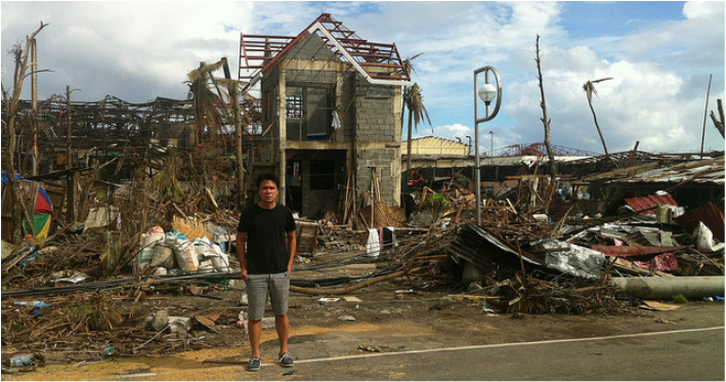 EDante, Memoirs of the relief efforts on 20 November 2013 Defying hunger A middle-aged woman from Tanauan town in Leyte told her story: At about 7:00 am on that fateful day of 8 November 2013, a sudden surge of sea water overwhelmed our house and pushed us up to the ceiling. My sister and I swam out of the house to escape, tied ourselves with a rope to the house, and waited for several hours until the water subsided. When the weather calmed down at about noon, we were shocked to see complete chaos and devastation, buildings flattened, huge amount of debris, and dead bodies scattered everywhere. It was a miracle we survived. We did not eat and drink for two days. The typhoon destroyed everything. We just waited for help. Our minds were too frightened to feel the need to eat. After two days, the first sign of help came – relatives and friends arrived town by motorcycle. We tasted food for the first time. A few days after, more relief goods from aid agencies and government came but were not enough to feed thousands of hungry people in our town. She related to us that the day prior to the typhoon there was a public announcement urging people to prepare and evacuate. It wasn’t compelling enough so most people ignored the appeal. Besides, these people were used to strong typhoons in the past. In another town, we heard that the mayor herself made an emotional plea for urgent evacuation and warned people of impending disaster. Many people were obliged to evacuate and thus were saved. Dark cloud descended A business man from Tanauan town related his story. His house was located next to a large coconut oil processing plant located close to the seashore. He said he was closely monitoring the development of the typhoon from the news and made preparations for it. He cut down all the trees near his house. He became an object of ridicule from neighbors. At around 6:00 am that day, incredibly strong and gusty wind descended his town. Visibility was almost zero. Lightning strikes were seen behind the dark clouds covering the entire town. Then an unrelenting wall of sea water hit his town and almost drowned him. Somehow, he managed to escape and stayed alive until the water subsided. The official government estimate of close to 5,000 deaths was unbelievably conservative, he said. In Tanauan town alone, he believed over 1,000 people died. “Storm surge” A group of six working men, taking a break from removing a large amount of debris surrounding the Catholic Church in Tanauan town, were overheard talking about “storm surge”. One man said, “now I understood what a storm surge is”. Few days prior to the disaster, the government warned people of a storm surge but the people did not know what exactly that term meant. Had they been told that it was like a tsunami or perhaps a tidal wave, they would have escaped to the mountains without hesitation. Weeing, weeing, weeing! The day after the relief operation, three close friends drove all the way from Mindanao to join me. We got up early on Thursday, 21 November, and began a tour around the devastated areas in Leyte starting from Baybay in the eastern side of the island and proceeding to the western towns of Dulag, Tanauan, Palo and Tacloban City. As darkness began, and with no electricity in the entire island with at least half a million people, we located a common friend who lived in Albuera town. With his three young children, all boys, beside him, he told his story in a half-lit candle light. He was never been so scared, he said. The storm gushed out with incredible noise and hissing, “weeing, weeing, weeing”. It seemed that the wind burst out from the ground, destroying everything it touched. The first instance lasted for one hour and then there was a brief pause. They all went out of the house much relieved as they thought the storm was over. But it returned with vengeance and continued until around 10:00 am. He was stunned to see his town completely destroyed. He said he would not wait to escape the island when the next storm comes. With no money and limited food, they were barely surviving. Before leaving, we gave him all our remaining provisions for that day (canned food, bottles of water and some cash). 100 big trucks As my boat was arriving at Ormoc port, I was stunned with what I saw. What used to be a progressive city, with backdrops of a lush green tropical mountain at the back and beautiful beaches, had turned into a war zone. Buildings destroyed and debris covered the streets. The mountain appeared denuded and brown. Coconut trees seen in the horizon turned into protruding dead sticks. That scene caused a strange feeling in me. So I asked my brother-in-law who picked me up at the port how he felt during that day. He said it was an incredible and frightening noise. It was like 100 big trucks chasing next to your house or like a 747 jet plane landing on top of your roof. Heavy downpour Over 100 thousand families became homeless. We saw families setting up temporary dwellings made of coconut leaves, rubber sheets or salvaged GI sheets, with no or very little walls to protect them. During our stay in Leyte, unrelenting downpour was a daily occurrence, especially in the evenings. It was so depressing to think that so many people, including children and elderly, had to stay up all night soaked in the rain. Raining girl The last barangay (village) we visited was inaccessible to our truck as one fallen tree blocked the narrow and only road to the village. We asked the villagers to come to the truck. One of them was a little spirited girl. When she got her pack of relief good, it started to rain. She smiled, carried the pack on her back, started to walk towards the village and then sang cheerfully, “It’s raining men, alleluia, it’s raining men”. I said to myself, “that’s the Filipino spirit, inspiringly resilient and adaptable, and with a great sense of humour”. 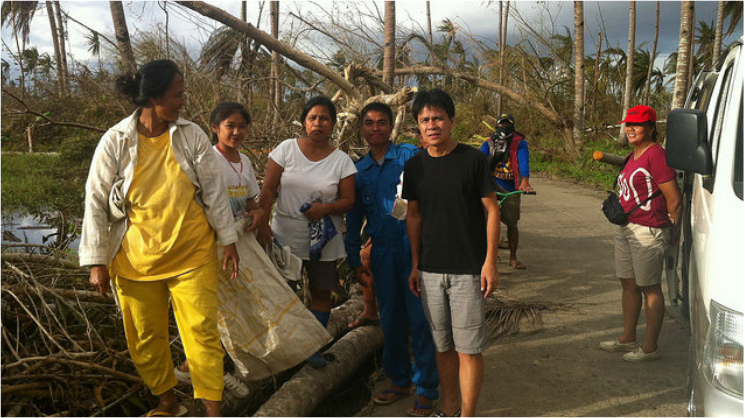 EDante, CFC monthly teaching
This reflection is taken from John 2:5 “Do whatever he tells you”. As we begin this reflection, let us first read the story of the Wedding Feast at Cana as found in John 2:1-11. 1 On the third day there was a wedding in Cana in Galilee, and the mother of Jesus was there. 2 Jesus and his disciples were also invited to the wedding. 3 When the wine ran short, the mother of Jesus said to him, “They have no wine.” 4 [And] Jesus said to her, “Woman, how does your concern affect me? My hour has not yet come.” 5 His mother said to the servers, “Do whatever he tells you.” 6 Now there were six stone water jars there for Jewish ceremonial washings, each holding twenty to thirty gallons. 7 Jesus told them, “Fill the jars with water.” So they filled them to the brim. 8 Then he told them, “Draw some out now and take it to the headwaiter.” So they took it. 9 And when the headwaiter tasted the water that had become wine, without knowing where it came from (although the servers who had drawn the water knew), the headwaiter called the bridegroom 10 and said to him, “Everyone serves good wine first, and then when people have drunk freely, an inferior one; but you have kept the good wine until now.” 11 Jesus did this as the beginning of his signs in Cana in Galilee and so revealed his glory, and his disciples began to believe in him. I would like to focus on verses 3, 4 and 5 and share some insights from these verses. Verse 4 is probably one of the most difficult verses in the New Testament to comprehend. Literally, it seems to convey a form of rejection. It sounds like Jesus saying to Mary, I don’t care, it is not my business, I have nothing to do with it. In the New American Bible, a footnote to this verse explains that the literally meaning of the verse is “What is this to me and to you?” This gives us a completely different sense of that short conversation. It is about relationship between Jesus and Mary, and the role she has taken as a Mother of God. Based on the culture at that time, a son has a moral obligation to submit to his mother’s pleading. By the time the son reaches the age of maturity, the moral obligation based on flesh and blood is broken. Thus, when Mary pleaded, Jesus expressed his consent, not because of any moral obligation, but to establish Mary as the initiatress of Jesus miraculous activities based purely on spiritual bond. Jesus first miracle happened because of Mary. It is a symbol that Mary is the key to miracles. Therefore, when Jesus expressed those mysterious words in front of her mother, Mary understood his consent. So in verse 5, she said to the servants: “Do whatever he tells you”. Going back to verse 3, Mary said “Son, they have no wine”. It is interesting to note that Mary did not ask for the miracle of turning water into wine. She simply expressed her concern and allowed Jesus to decide how to respond. I believe this is a powerful lesson about prayer. When we pray, we should allow God to determine the manner in which he wants to answer our prayer. He knows what is best for us. It is normal to pray for a renewal of our job contract when it is going to end. However, God may have a better plan, perhaps a job with another company, or a break of work to allow us to spend more time with family and friends or even to rest. God has many other options and he will give us the best one if only we believe. Moving on to verse 5, Mother Mary said: “Do whatever he tells you” She addressed these words to whom, to the newly married couple, to the guests, or to the owner of the house? Verse 5 states that these were addressed to the servants. Many aspire to be God’s servants and made many sacrifices to do some work for the church. Did Jesus not say: He who lays his hand on the plough and looks back to bid farewell to those who are staying, is not fit for the Kingdom of God (Luke 9:62). When we decided to join the community, we would need to lay our hands on the plough not to cut the ground with the ploughshare but to open the hearts of men and sow there the word of God. As God’s servants, our entire being is founded on obedience. It is our identity. It is our way of life. It is our bread and butter. It is the one that defines us. It is the reason of our being. It is our destiny. Once we no longer obey, we lose the identity of being God’s servant. Why is it difficult to obey? Imagine one day you were alone in your prayer room, absorbed in meditating God’s words, and suddenly the winds blew, the door of your room opened, and there in front of your door Jesus appeared in his glorious body, in dazzling light, gentle in his appearance, and said “My son/daughter, do you want to serve me and become a leader in your church community?” How would you react in this situation? Would you say, “not me Lord, as you know, I am so busy”? Or would you say “Yes” right away because you do not have the courage to refuse God? Would you prefer that God appears to you in a miraculous way to ask you directly to serve him? Indeed, the bible and the church history tell us many stories of people receiving direct revelations from God, for which many of them obeyed. For one, the story of Saul on his way to Damascus demonstrates Jesus being seen and heard by man. That particular experience alone propelled Paul to fulfil what seems to be one of the most dangerous and challenging works God has given to man – to evangelize the most powerful Roman Empire during his time. I believe that the clearer the call, the bigger the responsibility becomes. Through his great mercy for us, and our limited capacity to respond, God often does not speak to man the way he did for Saul. His voice is so subtle and heard only through a lift of faith. Over the years, I have gathered stories about the life of a priest. I am curious how a man arrives at a decision to become a priest. I was surprised by what I had heard so far. A priest in our parish told me that it was the bad experience he had with his father, who left the family when he was young, that compelled him to be a priest. After a few minutes, he returned to me to say; it was my mother who brought me to the seminary. Finally, after another few minutes, he admitted he only knew it was God’s will for him to become a priest six years after his ordination. Another priest once told me that he was attracted to the priestly life while observing a group of young seminarians who lived in a seminary near his parents’ house. Each day¸ he used to watch them working, praying and meditating peacefully together and he sensed a tremendous peace emanating from them. That experience and feeling alone was sufficient to lead him to priesthood. Recently, this priest died peacefully at a very advance age. A close couple friend told us one day about how their son became a priest. Their son was educated in an international school in Bangkok and graduated top in the class. He was sent to the US to pursue graduate studies in nuclear physics. One day in a church, and while listening to a mass, he heard the song “Here I am Lord”. He felt a call from above and responded to that. To his parent’s dismay, he decided to quit school that day to enter the seminary. In order to obey God, we must be sensitive to God’s ways of calling us. Each day, he presents himself to us to remind us to pray and serve him in many ways. Unless, we learn to hear God’s voice and respond to that voice, we will never become an obedient servant of God. Contemplation is defined as an action of looking thoughtfully at something for a long time or of having a deep reflection at something. In the Christian tradition, contemplation is often associated with an action from the Holy Spirit to enlighten the soul and therefore drive the contemplation process into a fruitful conclusion – deeper understanding or appreciation of the object of contemplation. For this piece, the object of contemplation is the Fourth Word, which is found in Matthew 27:45-46.
“From the sixth hour until the ninth hour darkness came over all the land. About the ninth hour Jesus cried out in a loud voice, “Eloi, Eloi, lama sabachthani?” – which means, “My God, my God, why have you forsaken me?” To guide us in contemplating the Fourth Word, I thought we should try to answer four key questions about the Fourth Word. Question 1: Why did Jesus quote Psalm 22? Question 2: Was Jesus really abandoned by God? Question 3: What does it means to be abandoned by God? Question 4: What does Jesus’ abandonment experiences teaches us? Why did Jesus quote Psalm 22? Psalm 22:1-2 says “My God, my God, why have you abandoned me? Why are you so far away when I groan for help? Every day I call to you, my God, but you do not answer. Every night you hear my voice, but I find no relief” These words were attributed to David. For twice in the bible God says that in David He had found 'a man after my own heart' (1 Samuel 13:14, Acts 13:22). David was one of God's favorites and was very close to David from his youth. Many passages in Psalms reflect David’s love and trust in God. • In Psalm 23, David says “The Lord is my shepherd I shall not want” • In Psalm 27:4, David expresses his ultimate aim in life “One thing I have desired of the LORD that I will seek; that I may dwell in the house of the LORD all the days of my life, to behold the delightfulness of the LORD, and to inquire in His temple. • In Psalm 62:5-7, David reveals his deep trust in God, “My soul, wait silently for God alone, for my hope is from Him. He only is my rock and my salvation; He is my defense; I shall not be shaken. In God is my salvation and my glory; the rock of my strength, and my refuge, is in God. • In Psalm 27: David says “The Lord is my light and my salvation, whom should I fear.” As you know, David’s courage to fight and defeat the giant enemy Goliath came from his deep trust in God. Just by reading these passages already gives us a good insight of the very intimate relationship that exists between David and God. David was always in the presence of God and enjoyed all the benefits of having God so close and so intimate. David’s life we can surmise must have been full of joy and happiness. However, it wasn’t like that all the time. We know from the bible that David sinned against God and that brought great distressed in his life to the point that he was no longer able to feel God’s presence and lost all the benefits of being close to God. At this point, he uttered “My God, my God, why have you abandoned me? Why are you so far away when I groan for help? Every day I call to you, my God, but you do not answer. Every night you hear my voice, but I find no relief” In those same words, Jesus found a way to express the cry of his heart: Why had God abandoned him? Why did his Father turn his back on Jesus in his moment of greatest agony? That leads us to the second question 2: Was Jesus really abandoned by God? Before we attempt to answer this question, let me just read out to you Jesus’ own words as revealed from the book True Life in God. Jesus says: Arriving on the Mount, they thrust Me on the ground, tearing off Me My clothes, leaving Me naked for every eye to see Me, My wounds opening again and My Blood flowing out on the earth; the soldiers offered Me wine mixed with gall; I refused it for deep inside Me I had already the bitterness given to Me by My foes; they quickly nailed My wrists first, and after allowing the nails to set in My cross, they stretched My broken body and with violence pierced My feet through; what pain, what agony, what torment of My soul, forsaken by My beloved ones, denied by Peter upon whom I would found My Church, denied by the rest of My friends, left all alone, abandoned to My foes; I wept, for My soul was filled with sorrow; the soldiers erected My cross, setting it in the furrow; I gazed upon the crowds, from where I was hardly seeing; from My swollen eyes, I watched the world; I saw no friend among those who mocked Me; no one was there to console Me; "My God! My God! why have you forsaken Me?"; forsaken by all those who loved Me; Was Jesus really abandoned by God? We have to realize that Jesus was so human. He underwent the pains of being human: he was born on a rough and cold manger; he worked as the son of a carpenter; he had to leave his mother to begin his mission; he was criticized by the Pharisees for doing good and being with sinners. As his frail human body hung on the cross, he had to cry out to God, not complaining, but seeking God’s help in the midst of suffering. Yes, he knew that God was with him. He was just expressing words of faith that his God will carry him through this most difficult ordeal. We are like that too. When calamity happens in our life, don’t we say similar words: “Lord, are you there? Please help. Why this? I need you now. Please don’t abandon me. Make me strong. Give me courage and strength.” I recalled when Tsunami struck the South Indian Ocean in 2004 and caused a lot of deaths, including in the South of Thailand, many people, including myself, asked the same question: “Where is God?”. Brothers and sisters, these words are expressions of FAITH. They reveal a sense of confidence in God who will always say: I am always with you always and be not afraid.” In this sense, Jesus here was not asking a question why God had abandoned him. Rather it was his expression of deep feeling of loneliness in the midst of great suffering? Of course, we will never fully know for sure what Jesus was experiencing in this moment. Question 3: What does it means to be abandoned by God? St Paul’s second letter to Corinthians (5:21) tells us that God made him (Jesus) who had no sin to be sin for us, so that in him we might become the righteousness of God”. This brings to the idea that the Father did abandon Jesus because he took upon himself the penalty for our sins. In other words, man’s sins were transferred to Jesus while He was on the Cross; God was so enraged against sin that when Jesus became sin-laden on the Cross, the Father could not bear to look upon Him and thus turned away from Him. This was one of the penalties that Jesus had to take on Himself as result of being our sin-bearer. In that difficult moment, Jesus experienced something far more horrible than physical pain. Jesus felt spiritual separation from God. The beloved Son of God knew what it was like to be rejected by the Father. We can then say that the Father abandoned the Son for our sake, for the salvation of the world. But can I really grasp the mystery and the majesty of this truth? As Martin Luther once said: “God forsaking God, who can understand it” Jesus was fully a man on the cross and in order to redeem mankind had to experience everything that man experiences which includes spiritual death. So, Jesus died spiritually when God turned away from Him and is the reason for the cry of Jesus. Question 4: What does Jesus’ abandonment experience teach us? There are many lessons we can draw from Jesus experience, like lesson of faith, trust in God and intimacy between man and God, as shown in the lives and David and Jesus himself. For this session, I would however like to focus our reflection on the sins of man. Sin is a horrible thing. It separates us from God. Sin and God do not go together. They are exact opposite. Oftentimes, we do not realize the magnitude of damage we make for ourselves, our souls, and of the risk we danger we take if we persevere in our sins. Sin is a horrible thing. Jesus says “Not only is the death of a sinner horrible, but also his life. One should not be deceived by their outward appearance. It is a veneer, a curtain placed there to cover the truth. In truth I tell you that one hour, just one hour of the peace of the righteous people is infinitely richer in happiness than the longest life of sin. To the eyes of the world the wealth of joy of a saint of God does not appear. So too is the abyss of restlessness and discontent which is in the heart of a sinner. Their death is a horror. How difficult it is for man to rise to God! And the main obstacle is in man himself, as he will not admit and meditate on himself and his faults. Really even Satan is very often slandered, by ascribing every cause of spiritual ruin to him. And God is even more accused falsely, as all events are ascribed to Him. God does not infringe man’s freedom. Satan cannot prevail over a will firm in Good. I solemnly tell you that, seventy times out of one hundred, man sins of his own will. And he does not rise from sin because he avoids examining his own conscience and does not want to meditate. Man stifles his conscience, even if his conscience shouts the truth on which he did not want to meditate, because his mind is proud and his flesh corrupted. Since we are all sinners, be meek with sinners. Remember these words: “Why do you observe the splinter in your brother’s eye, if first you do not take the plank out of your own eye?” Forgive those who offend you, in order to be forgiven. He who is without sin is a hypocrite and Hell awaits him. Man has committed every crime by having God close to him, but not in his heart; by having the knowledge of the word of God, but not the obedience to it. The more one is aware of the will and mind of the master, the more one is obliged to fulfill it accurately. If one does not act as the master explained in so great detail that nobody else was told so clearly, one will be severely beaten. If you can control your body, you can avoid many sins. Sins come from the body. When it is that a fault occurs? When there is the will to commit a sin, the knowledge of sinning, and the persistence to want to sin also after knowing that a certain action is sinful. It all depends on the will by which one performs an action, whether it is virtuous or sinful. Do not say to Me “Satan tempt us” as an excuse for descending towards the low path. Also God tempts with His love, which is very strong, with His work, which are most holy, with His promises which are most alluring. Are God’s words, promises, love not sufficient to counteract satan’s poison? All the germs of evil and all the longing for good are latent in man by God's loving will and by the wicked will of Satan who influence, tempts and instigates, whereas God attracts, comforts and loves. Satan tries to seduce, he works to conquer God. And God does not always win, because creatures are heavy until they choose love as their law. I would like to end by recalling a story given by a Filipino named Stanley Villavicencio who is from Cebu and is now a promoter of Divine Mercy. Prior to his call, we experienced death for three days. While at the hospital, declared dead by the doctors, he recalled he saw a light, a very big bright light, but not glaring. You can stare at it. It is like a fountain. It is like a fog as it slowly evaporates, until I notice someone is standing in front of me. And when I look at His face, I recognize Him as Jesus. As we are looking at each other, He showed me the film of my life, from my childhood up to my present. And I notice that every time I do good, it just goes on normally and I also notice that every time I commit a sin, suddenly it would go into slow motion as if He wants to show us that what we have done is wrong, as if He wants to show us that what we have done is a sin. And because I have also committed bigger sins, sins like what we call the mortal sin. Every time it shows up, suddenly it would stop, came closer and enlarged it. Then I said to myself, 'Why should this be included? There must be no word of sin in Heaven, because it is just too bad to look at, but even if I closed my eyes I could still see it. Also I notice that every time I commit a sin, I could feel the heaviness. I could feel the weight. The more I commit a sin, the more the heaviness, the more the weight. And I also notice that every time I do good, for example, if I give something to the poor, I could feel as if I were floating. So it is really true what is written in the Bible, 'That what so every you do to the less of your brethren, that you do unto Me." And I also notice that the sins I did not confess to a Priest it is too heavy, and also I notice that the sins that I confessed to a Priest, it is lighter. And we cannot deny anything because the screen is so big and very clear and also the pictures are also big and below the pictures are written the day, the month, the date and the year. And below that it is also written the hour, the minutes and the seconds. So, we cannot deny anything, even the seconds are recorded. In fact, He reviewed my film three times and after our long conversation, He tapped my shoulder and as He was tapping my shoulder, He said to me, 'You go back now, because you still have so many things to do. You still have so many things to finish. If I have something for you or if I have a message for you, I will just appear to you in your dream.' After He say that, I was at the I.C.U. in the hospital. Suddenly I got up and went back home. To end this reflection, let us thank Jesus for bearing all our sins and for enduring the infinite pain of crucifixion, all for the love of us and love for the Father. EDante, Perth, Australia, 26 December 2010
A missalette at St. Gerard Parish, located in a small suburb, north of Perth, for the feast of the Holy Family of Nazareth (26 December 2010), carried a quote by Fr. Stephen Freeman, "Christ did not come into the world to make bad men good, but to make dead men live." The “dead men” reminds me of the famous dry bones vision in the Book of Ezekiel (Ch. 37). In that vision, the people of Israel was liken to dry bones, completely devoid of organs, flesh and skins critical to support human life. It was to show to Ezekiel that the people of Israel are dead. It was not a physical death, but rather a spiritual one brought about by sinful life. In the book Poem of Man-God, Jesus explained the meaning of life and death. He said that man falls into error when considering life and death. Man calls “life” the period of time in which, born of his mother, he begins to breathe, to nourish himself, to move, to think, to act; and he calls “death” the moment when he ceases breathing, eating, moving, thinking and acting. But it is not so. Life is not existence. Existence is not life. A plant or an animal exists but they do not possess the life which I am speaking about. The life of which I am speaking does not begin with the existence of the body and does not cease with the ending of the flesh. It does not start in the mother’s womb. Life begins when a soul is created by the Thought of God, and when infused or injected into the fetus inside the womb of the mother. This fetus plus the soul injected with life makes up a man, created in the image and likeness of God. The destiny of this man is heaven. Now listen, life never ends because the soul does not die. But life can die to this divine destiny if sins kill it and then the soul suffers eternal punishment in hell.If preserved as such, this life reaches the perfection of living, by becoming eternal, perfect, blissful like its Creator. The dry bones vision followed God’s promise of a new life based on fidelity to God. That promise was fulfilled through the birth of Jesus. St. John the Apostle declared to us this beautiful truth through his famous words, “For God so loved the world that he gave his one and only Son, that whoever believes in him shall not perish but have eternal life.” (John 3:16). Furthermore, he explained that Jesus’ presence in us is true life, “Whoever has the Son has life, and whoever has not the Son of God has not life.” (1 John 5:12). Christmas is indeed the fulfillment of God’s promise for a new life. The celebration of Christmas these days is far too remote from its spiritual origin. Christmas has now turned into a major secular celebration. It now bears the words “Holiday Season” and marks with secular message of “Season’s Greetings”, with no regard of the birth of Jesus. Christmas party is now called “Year-end party” as a pretext that the former is offensive to non-Christians. Little time is spent for prayers and the sacraments. Meanwhile, worldly matters occupy our mind and time. At Christmas day, shopping malls are filled, new products are launched and big parties are held. They seem to promote a spirit of joy, but they give a bad aftertaste of emptiness and selfishness. They do not produce the kind of joy that brings peace in the spirit. The following parable suggests an insight of what might had happened over the years: “A father had a son whom he was extremely pleased. The son has brought great joy to the father and to all his friends, relatives and servants because of the son’s obedience, humility and great love to all. To honor his son, the father decided to appoint a special day of the year for his son. On this special day, the father threw a big feast for all the people of his town. Everyone is invited. The father, who was so talented, rich and very generous, know how to make a very good party that give great joy and merriment to all people. Everybody loves the party. The spirit is so beautiful and gives great joy to one’s heart. As years pass, people who come to the party came to enjoy the food, dancing, laughter and the whole ambiance much more than the honoring of the son. Until such time that people no longer recognize the son in the party. The day is celebrated but the son is forgotten.” At the Christmas Eve mass in St. Gerard Parish, Moonyeen and I, with our children, witnessed signs of hope. In spite of the blistering summer heat, and with no air-conditioning, the chapel was filled with parents and their children. The church had never been so packed with people as we understood it from our daughter. Even the least sought front seats were completely occupied. The priest gave a very inspiring sermon about the birth of Christ and the love of God. I still recalled his powerful words, “God is much closer than you think”. His words were so nourishing to the spirit and brought so much joy in our hearts. The church choir sang beautiful Christmas songs reminding us of that special night of the birth of Christ, the glorious hallelujah of the angels, and the visit of the shepherds, the first among those who venerate the body of Christ apart from Mary and Joseph. The Christmas story is indeed amazing. In the midst of secularizing and spiritual dryness, God continues to shower His graces upon us. His promise of a new life is eternal. It was truer at that time of Ezekiel as it is now. There is hope for those who allow God to fulfill his promise in them according to his words, “l will sprinkle clean water upon you to cleanse you from all your impurities, and from all your idols I will cleanse you. I will give you a new heart and place a new spirit within you, taking from your bodies your stony hearts and giving you natural hearts. I will put my spirit within you and make you live by my statutes, careful to observe my decrees. You shall live in the land I gave your fathers; you shall be my people, and I will be your God” (Ezekiel 36:25-28). I pondered upon this question many times. As I now know that even non-believers (those that do not attend church, not interested in religious matters and do not pray) could be in heaven with God if they are able to live a morally upright and honest life, and the environment and circumstances they are in do not encourage them to practice the faith. So what is the advantage of being a firm believer of the Christian faith?
Now, we can compare a good Christian believer and a good non-believer. Both should have the same condition, body and soul, at birth. However, the goodness that one can attain being a Christian should normally be superior and more perfect since the model of that goodness is Jesus, who himself is superior and perfect, and the work of the Holy Spirit and the spiritual graces In the end, a good Christian has higher possibility to enter heaven, with no or shorter period of expectation in purgatory (purification of souls); while a non-believer would need a longer period to be able to reach the perfect knowledge of God and His Christ. Think of an athlete with the similar skills and conditions. The athlete who undergoes intensive training and improves his skills is in a better position to succeed than the one who does not train. |
Authorfather of countless children Archives
December 2025
Categories |
 RSS Feed